
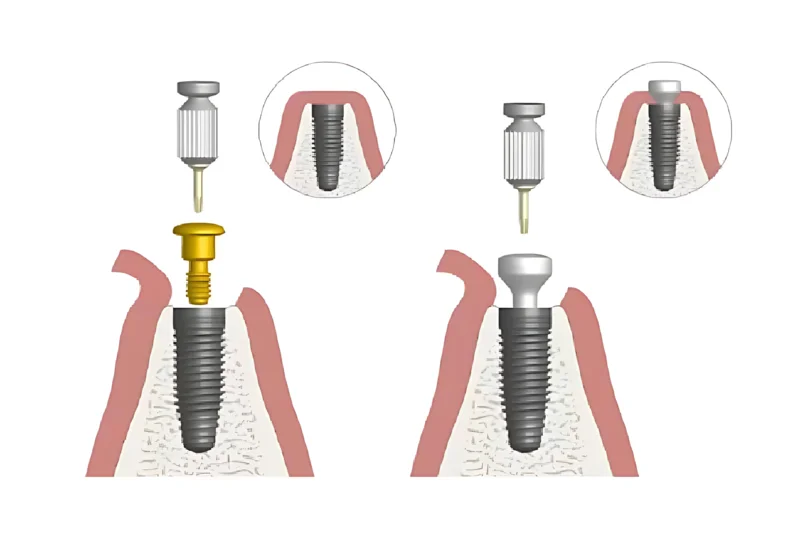
A Healing Implant, also known as a healing abutment, is a type of abutment used in dental implantology to help the gingiva heal quickly following the surgical placement of the implant fixture.
The following article will provide you with important information regarding healing abutments, assisting you in making a well-informed decision when considering dental implant placement.
1. What is a Healing Implant / Healing Abutment?
A Healing Implant, commonly referred to as a healing abutment, is a component that accelerates the gingival healing process, utilized after the implant fixture is placed and prior to the placement of the prosthetic abutment.
The healing abutment is not a permanent component of the complete implant restoration; rather, it is a temporary fixture attached by the clinician to the implant body after its successful surgical insertion into the jawbone.
Healing abutments are typically fabricated from Titanium or Zirconia—materials that have been clinically tested and proven safe for the human body.
There are two distinct timings for the placement of a healing abutment: the first is immediately following the placement of the implant fixture, and the second is after the implant has achieved solid osseointegration into the jawbone.
However, the second scenario is predominantly indicated only when bone quality is poor and soft tissue grafting is required.
2. The Role of the Healing Abutment
The healing abutment plays a crucial role that influences the long-term success of the dental implant; not only does it support the healing process after the implant fixture is placed, but a customized abutment also facilitates the regeneration of the gingiva to its ideal anatomical morphology.
2.1. Facilitating gingival healing post-surgery
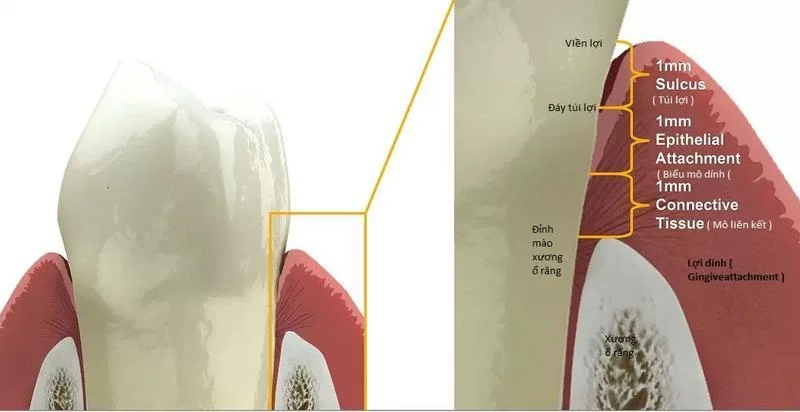
In terms of biological mechanism, when placed into the gingival tissue, the healing abutment functions to stimulate the body to generate a layer of squamous epithelium, which serves as a prerequisite for the re-establishment of the biologic width around the implant after the prosthetic abutment is attached.
The biologic width is an extremely critical structure of a natural tooth; upon tooth loss, this biologic width is lost. Therefore, during implant placement, the re-establishment of the biologic width will determine the long-term success of the dental implant.
2.2. Re-establishing the anatomical morphology for the peri-implant gingiva
Stock healing abutments merely serve the purpose of facilitating gingival healing.
Conversely, with customized abutments, in addition to healing, they ensure the esthetics of the restoration by shaping the peri-implant gingival tissues according to anatomical standards.
Customized healing abutments are individually designed according to the characteristics of the gingival margin at each specific tooth position of the patient, helping to create a gingival emergence profile (gingival convexity) that mimics a natural tooth.
Simultaneously, the customized healing abutment acts as a natural biologic seal, preventing bacteria from invading deeply into the implant fixture, thereby eliminating the risks of infection and implant rejection.
3. Classification of Healing Abutments
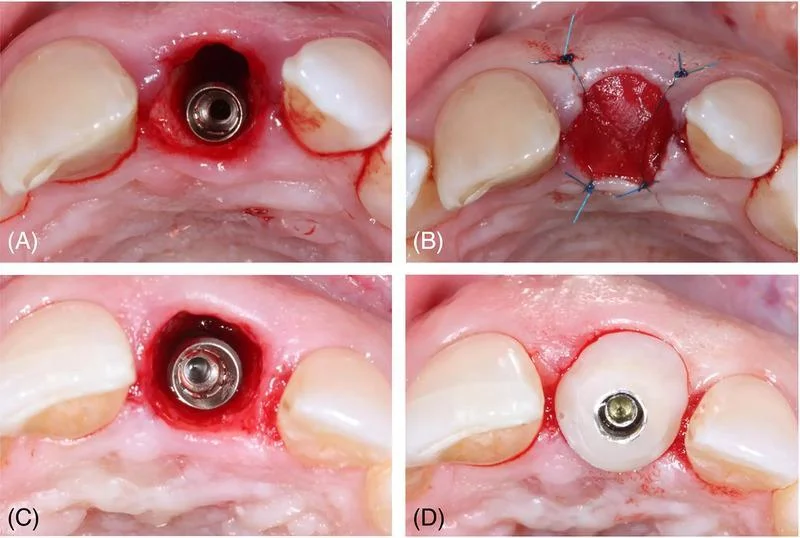
Currently, dental clinics offer two types of healing abutments in the market, including stock healing abutments and customized healing abutments.
3.1. Stock Healing Abutments (Healing Caps)
Stock healing abutments (Healing Caps) are manufactured by implant companies and are typically provided along with the implant fixture.
A stock healing abutment has a tapered cylindrical shape with a circular cross-section, is available in various diameters and heights, and is manufactured from pure titanium.
Stock healing abutments serve only a single role: facilitating gingival healing post-surgery and re-establishing the necessary biologic width; they are incapable of re-establishing the gingival anatomical morphology.
Consequently, the gingiva at the edentulous site does not achieve a natural emergence profile comparable to that of a natural tooth.
3.2. Customized Healing Abutments
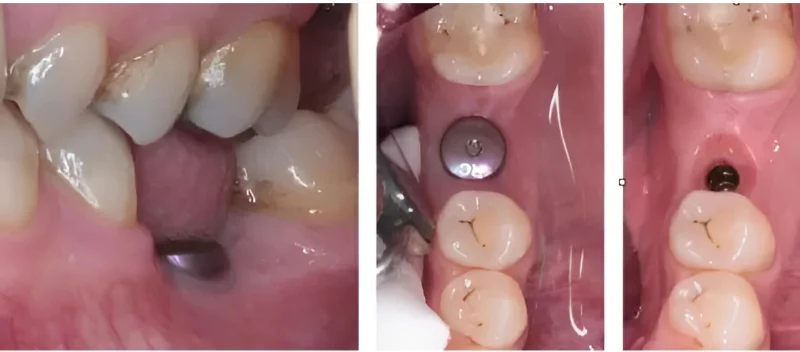
Customized healing abutments are individually designed for each patient, tailored to the specific anatomical structure of the gingiva and the alveolar socket.
At Lac Viet Intech Dental Clinic, customized healing abutments are integrated into the DCT personalized dental implant solution, ensuring perfect dental restorations in terms of both esthetics and function.
The primary material utilized is Zirconia, which closely resembles the color of natural teeth; this promotes the healing process and anatomical gingival regeneration, while simultaneously establishing the foundation for the biologic seal around the dental implant.
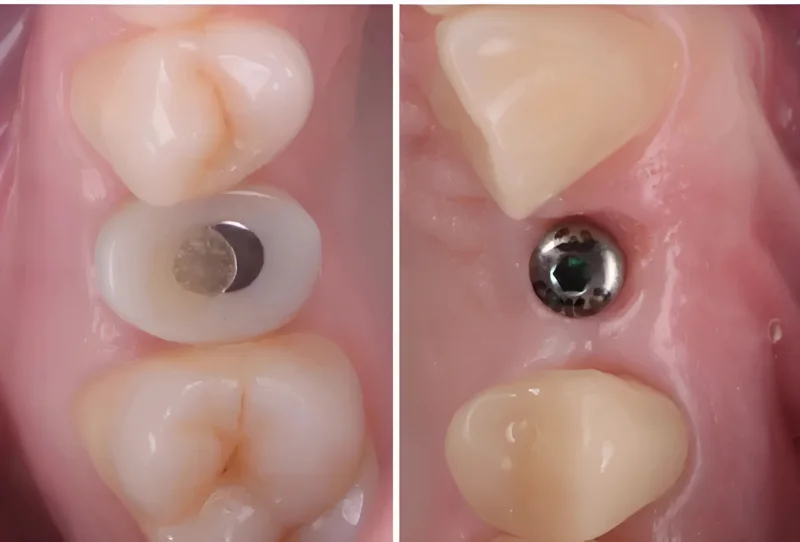
| Criteria | Stock Healing Abutment | Customized Healing Abutment |
|---|---|---|
| Material | Pure Titanium | Pure Titanium or Zirconia ceramic |
| Characteristics | Features only one shape: a tapered cylinder with a circular cross-section. Capable only of facilitating wound healing. | The shape of the healing abutment is custom-designed to suit the specific characteristics of each patient. Performs both the role of healing and re-establishing the gingival anatomical morphology around the implant. |
| Cost | Varies by dental clinic; some clinics provide it free of charge when patients undergo traditional implant placement procedures. | Varies by dental clinic; some clinics offer it as a complimentary inclusion within specific implant solutions. |
Thus, the placement of a customized Healing Implant offers distinctly superior advantages compared to stock healing abutments by delivering highly esthetic outcomes for the implant restoration. For patients comparing treatment centers, it is also helpful to review why many international patients choose Lac Viet Intech for dental implant treatment.
When evaluating the final restoration, clinicians should also consider the broader ideal criteria for a prosthetic abutment and how the selected component fits within the overall types of implant abutments used during implant treatment.
FAQ: Healing Implants and Healing Abutments
What is a healing implant or healing abutment?
A healing implant, also called a healing abutment, is a temporary implant component attached after implant placement to support gingival healing before the final prosthetic abutment is used.
What is the main role of a healing abutment?
Its main role is to support gingival healing and help re-establish the biologic width around the implant. In customized forms, it can also shape the peri-implant gingiva for a more natural emergence profile.
What is the difference between stock and customized healing abutments?
Stock healing abutments mainly support healing, while customized healing abutments are designed for each patient to support healing and recreate the natural gingival anatomy around the implant.
Why are customized healing abutments preferred in esthetic implant cases?
They help form a more natural gingival contour, improve soft-tissue esthetics, and create a better biological seal around the implant restoration.