
One of the most common questions international patients ask is:
“How long does dental implant take in Vietnam?”
At first glance, this seems like a simple question about time. But in reality, it reflects a deeper concern:
How long does it take to achieve a result that is truly safe, stable, and long-lasting?
At Lạc Việt Intech, implant dentistry is not designed to be fast—it is designed to be correct. The clinic does not pursue speed as a goal. Instead, it follows a principle that every implant case must achieve three outcomes:
- Safety
- Long-term durability
- Stable function and natural aesthetics
This is why every patient is treated under the DCT personalized implant system, supported by precision technologies such as guided surgery (surgical guide) or X-Guide real-time navigation, combined with customized abutments and full-ceramic restorations.
So the correct question is not:
How fast can it be done?
But rather:
What process—and how much time—is required to achieve a truly successful implant result?
I. Overview: Two Main Phases of Implant Treatment
Dental implant treatment at Lạc Việt Intech is divided into two major phases:
- Phase 1: Implant placement (surgical phase)
- Phase 2: Prosthetic restoration (final teeth placement)
These two phases are separated by a critical biological period:
Osseointegration (bone healing)
This is the period when the implant integrates with the jawbone, forming a stable foundation. It cannot be rushed without increasing the risk of failure.
II. Phase 1: Implant Placement (3–4 Visits)
First Visit: Data Collection and Medical Screening
The first appointment is not a treatment session—it is a comprehensive diagnostic session.
At this stage, the clinic focuses on collecting all necessary data to ensure safety and accuracy. This includes:
- CBCT 3D imaging to evaluate bone structure, nerve position, and sinus anatomy
- Digital scanning of teeth, gums, and bite (occlusion)
- Blood tests and blood pressure checks to assess systemic health risks
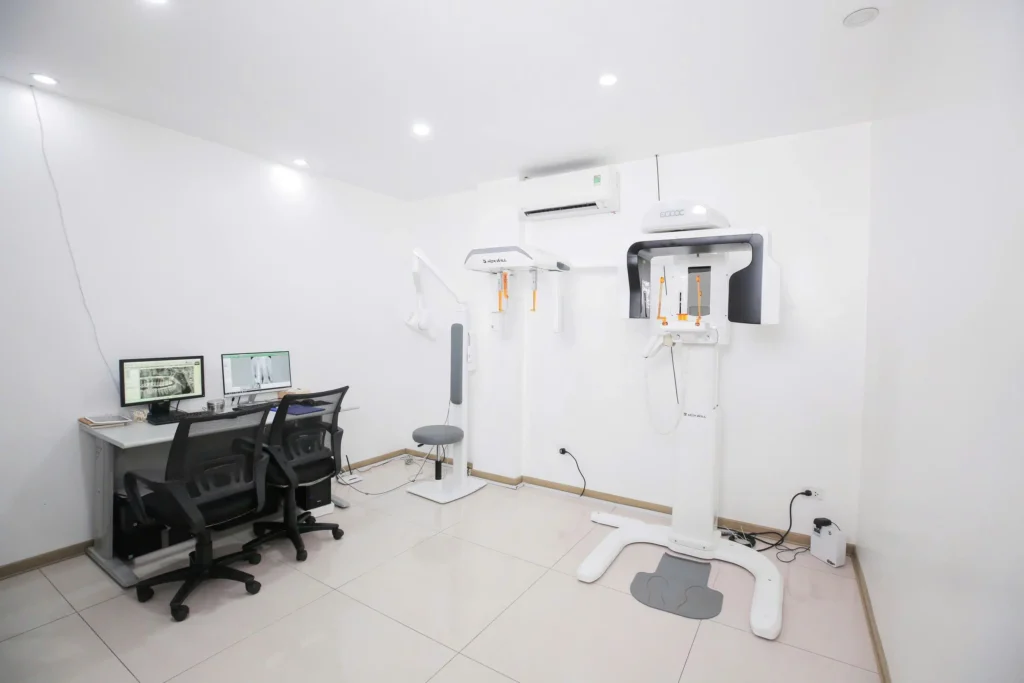
This step is critical because implant treatment is not only about the jaw—it is also about the patient’s overall health.
Once all data is collected, the dentist begins:
- Treatment planning
- Designing the surgical guide
- Creating a customized healing abutment
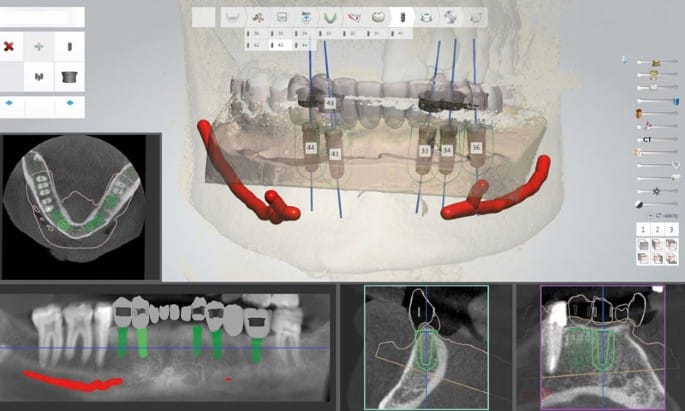
Within 24 hours, the full treatment plan is completed.
Second Visit: Implant Surgery
At the second appointment, the dentist performs the implant placement.
Thanks to the DCT system and precision technologies such as guided surgery or X-Guide navigation, the implant is placed with high accuracy based on the pre-planned position.
This results in:
- Reduced surgical risk
- Better alignment with the final restoration
- Improved long-term stability
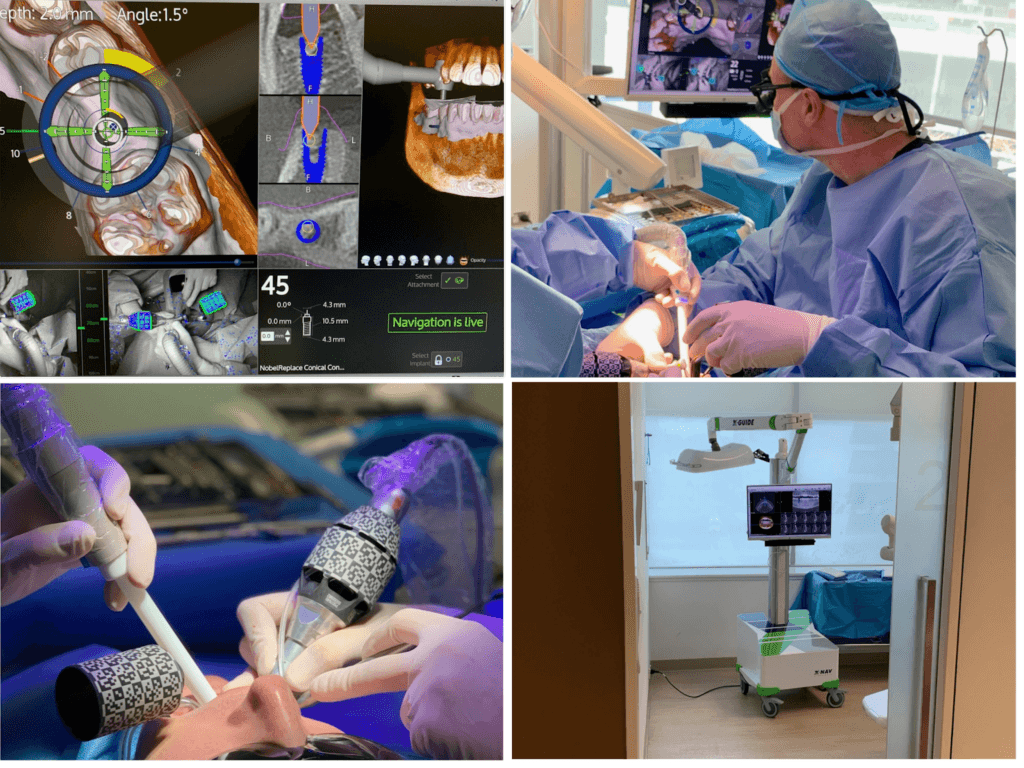
The surgery itself is typically completed in a single session.
>>See also: What is DCT dental implant solution?
Third Visit (After ~5 Days): Healing Check & Suture Removal
Approximately five days after surgery, the patient returns for:
- Healing evaluation
- Suture removal (if applicable)
This visit ensures that the soft tissue is responding well and that no early complications are present.
Optional Visit: Temporary Teeth Placement
In cases involving:
- Aesthetic zones (front teeth)
- Full-mouth restoration
The patient may return for an additional appointment to receive temporary teeth.
The purpose of temporary teeth is:
- To restore appearance
- To allow basic chewing function
However, they are not the final solution—they serve as a transitional phase while the implant integrates with bone.
III. Healing Period: 2 to 4 Months
After Phase 1, the implant must integrate with the jawbone.
The duration depends on:
- Implant type
- Bone quality
- Patient health condition
Typical healing time: 2 to 4 months
This period is essential. Attempting to shorten it without proper conditions can lead to:
- Implant instability
- Bone loss
- Long-term failure

IV. Phase 2: Prosthetic Restoration (2–3 Visits)
First Visit: Evaluation & Digital Impression
After the healing period, the patient returns for:
- X-ray imaging to confirm bone integration
- Digital scanning to capture the implant position
At Lạc Việt Intech, this process is fully digital.
Traditional impression methods are replaced by advanced scanning technology, ensuring:
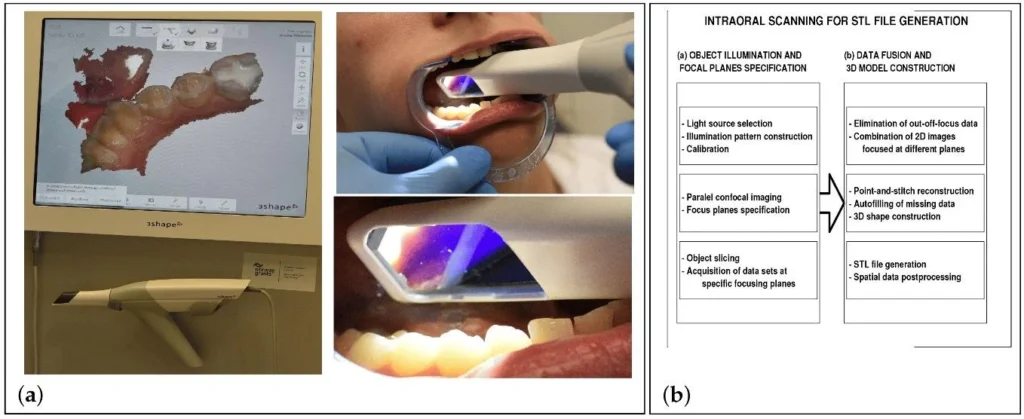
- Higher accuracy
- Better patient comfort
- More precise prosthetic design
Second Visit (Full-Arch Cases Only): Aesthetic & Bite Try-In
For full-mouth implant cases, a second visit is required approximately 24 hours later.
At this stage:
- A prototype prosthetic (trial arch) is tested
- The dentist evaluates aesthetics and bite alignment
- Adjustments are made to achieve optimal results
This step ensures that the final prosthesis is not only functional but also harmonious with the patient’s face and smile.
For single-tooth implants, this step is usually not required.
Final Visit: Placement of the Permanent Restoration
The final prosthetic is delivered 2–4 days after the try-in phase, depending on case complexity.
At this appointment:
- The final crown or prosthesis is installed
- Bite and aesthetics are fine-tuned
- The patient receives full functional restoration
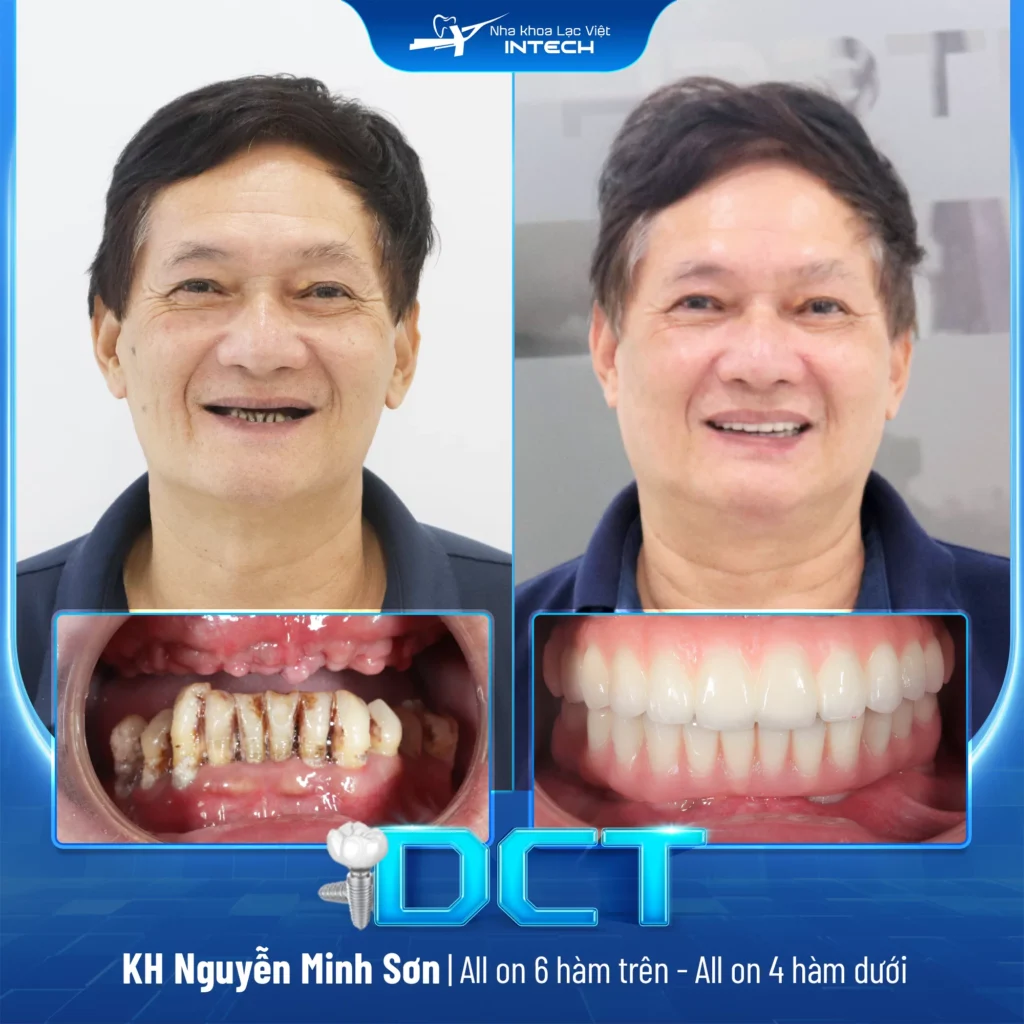
This marks the completion of treatment—but not the end of care.
V. Post-Treatment Care and Maintenance (Free of Charge)
At Lạc Việt Intech, implant care continues beyond treatment.
Follow-up schedule:
- Year 1: 2 visits (every 6 months)
- Year 2: 1 visit
- After that: 1 visit every 5 years
At each follow-up, the dentist will:
- Check bite function
- Evaluate gum health
- Take X-rays to assess bone response
- Perform cleaning and maintenance
All follow-up care is completely free.
VI. Commitment at Lac Viet Intech
Lạc Việt Intech defines implant quality through commitment, not marketing.
The clinic guarantees:
- 100% of surgeries performed by implant specialists
- Use of advanced and appropriate technology
- Genuine, high-quality materials
- Transparent pricing with no hidden costs
- Long-term warranty with full replacement (not partial repair)
Conclusion: How Long Does Dental Implant Take in Vietnam?
So, how long does dental implant take in Vietnam?
At Lạc Việt Intech, the answer is not a fixed number—it is a structured process designed to ensure:
- Safety
- Stability
- Long-term success
Total treatment time: typically 2 to 4 months, depending on the caseBut more importantly:
It is the time required to achieve a result that lasts for years—not just days.