
The healing abutment is a critical component that serves as an intermediate step between the implant placement phase and the prosthetic phase. Its role is to facilitate gingival healing, re-establish gingival contours, and stimulate the gingival tissue to form a layer of stratified squamous epithelium, which is a prerequisite for the formation of a biologic seal around the dental implant.
Today, with the advent of personalized implant solutions via digital techniques (Digital Customized Techniques – DCT), healing abutments are manufactured in a personalized manner, custom-tailored for each specific tooth and individual.
What is a Customized Healing Abutment?
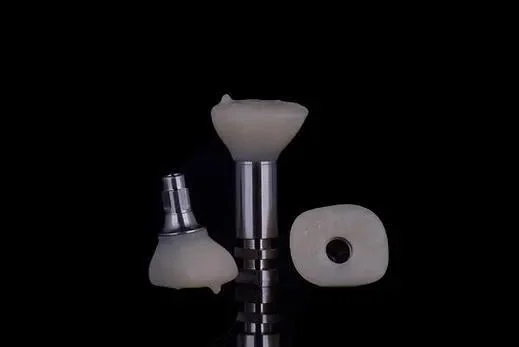
A customized healing abutment, fully known as a customized anatomic healing abutment (technically referred to as Healing Customized Digital), is a type of healing abutment manufactured specifically for each individual tooth and patient. Its purpose is to accurately recreate the gingival shape and periodontal tissues according to the ideal anatomical standards of that specific tooth and person.
Unlike stock healing abutments, which feature a single shape—a tapered cylinder with a circular cross-section—customized healing abutments are manufactured to match the standard coronal anatomy of the specific tooth. This helps shape the gingiva according to the correct anatomical standards of the tooth crown, creating the foundation for an implant restoration that is morphologically identical to a natural tooth.
Why Use Customized Healing Abutments?
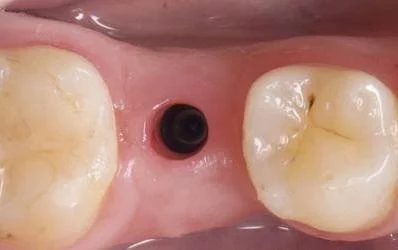
The anatomical morphology of gingival tissue and peri-implant structures varies significantly from one tooth to another and from one person to another. Meanwhile, stock healing abutments possess only a single design—a tapered cylinder with a circular cross-section—rendering the implant unable to re-establish the gingival anatomy and peri-implant tissues according to anatomical standards.
Therefore, when applying the DCT implant solution, a generation of customized anatomic healing abutments is required. These must have shapes custom-tailored to fit the specific gingival anatomical structure of each tooth and patient to accurately re-establish the standard anatomy for these structures.

The Role of Customized Healing Abutments
In personalized implant solutions, the “Healing Customized” component plays an extremely critical role, encompassing three main functions:
1. Esthetic shaping of peri-implant gingival tissue according to anatomical standards
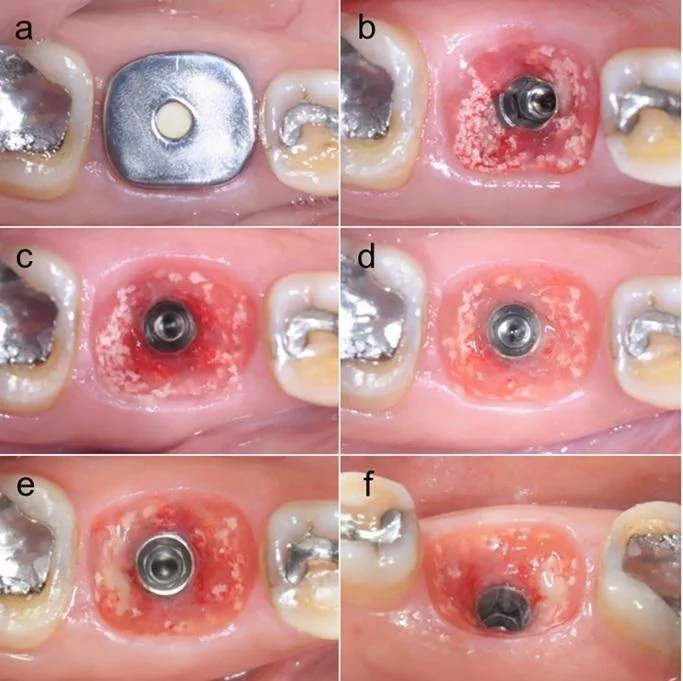
Because they are manufactured (“tailor-made”) according to personal anatomical standards, these abutments have the ability to re-establish the morphology of the gingiva and peri-implant tissues to the correct anatomical standard. This serves as a foundation for a personalized implant restoration that is more esthetic, biologically stable, and functional for mastication.
2. Catalyzing the initiation of stratified squamous epithelium, a prerequisite for the formation of a biologic seal around the implant
Fabricated from high-grade Zirconia or pure Titanium, when placed into the gingiva, the Healing Customized abutment stimulates the tissue to establish an epithelial layer surrounding it. Once the clinician removes the healing abutment and places the customized prosthetic abutment, this epithelial layer biologically connects with the surface of the prosthetic abutment. This establishes a biologic seal (referred to as the biologic width around the implant), preventing bacteria from the oral environment from invading the underlying structures.
See also: The role of healing abutments in dental implants.
3. Facilitating gingival healing post-surgery
When a healing abutment is placed, the gingiva heals after 15 to 20 days, at which point the clinician removes the healing abutment to install the prosthetic abutment and ceramic crown.
Comparison: Customized Healing Abutments vs. Stock Healing Abutments
Regarding Function
Stock healing abutments:
Primarily facilitate gingival healing and play a minor role in tissue stimulation.
Customized anatomic healing abutments:
Beyond facilitating gingival healing, they perform two critically important roles: re-establishing the anatomical morphology of the gingiva and peri-implant tissues, and stimulating the formation of epithelial cells around the implant.
Regarding Morphology
Stock healing abutments:
Have only a single morphology: a tapered cylinder with a circular cross-section.
Customized healing abutments:
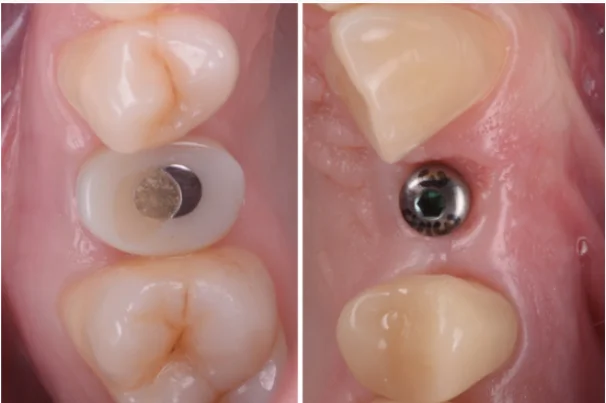
Feature diverse morphologies designed specifically for each tooth and individual. Typically, they are triangular for incisors, ovoid for premolars, and parallelogram or trapezoidal for molars.
Regarding Material
Stock healing abutments:
Made exclusively of titanium and are black (metallic) in color.
Customized healing abutments:
Predominantly made from high-grade Zirconia ceramic, which is white. They can also be made from pure titanium, though this is less common.
Distinguishing Customized Healing Abutments from Stock Abutments
The healing abutment is a component that patients can fully verify by looking in a mirror; when the doctor places the healing abutment, the patient can self-examine visually.
1. Stock Healing Abutments
Color: Black.
Shape: Circular/Round.
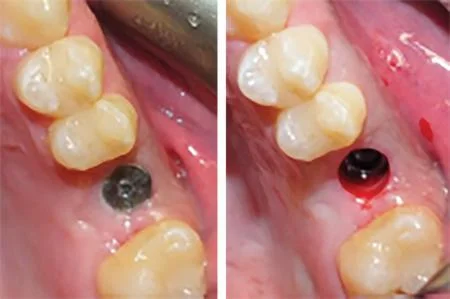
2. Customized Healing Abutments
Color: White.
Shape: Triangular, ovoid, trapezoidal, etc.
Note:
In some cases, to reduce costs, customized healing abutments made of titanium may be used. In such instances, the customized abutment will be black, but its morphology must still be triangular (for incisors), ovoid (for premolars), or trapezoidal/parallelogram (for molars).
Patients who are comparing implant treatment approaches can also review why many international patients choose Lac Viet Intech for dental implant treatment before deciding where to undergo care.

When are Customized Healing Abutments Used?
There are two distinct timings for placing a customized healing abutment:
1. Immediately after implant placement
If the primary stability of the implant is 35N (35 Ncm) or higher upon placement, the doctor will proceed to place the healing abutment immediately. This eliminates the need for a second-stage surgery.
2. After implant osseointegration
In cases where primary stability is insufficient, or if soft tissue grafting is required, the doctor will place the healing abutment after the implant has integrated (osseointegrated). This typically occurs 2 to 4 months after the day of implant placement.
Summary:
To successfully apply the DCT personalized implant solution, the use of a customized healing abutment is mandatory. It facilitates the recreation of anatomically correct contours while simultaneously stimulating the re-establishment of the biologic seal around the implant.
For a broader view of how this component fits into treatment planning, clinicians may also compare the different types of implant abutments used throughout the implant workflow.
FAQ: Customized Anatomic Healing Abutments
What is a customized anatomic healing abutment?
A customized anatomic healing abutment is a patient-specific healing abutment designed for an individual tooth and patient to recreate ideal gingival contours and support biologic seal formation around the implant.
How is a customized healing abutment different from a stock healing abutment?
A stock healing abutment has a standard round shape and mainly supports healing, while a customized healing abutment is designed according to the anatomy of the specific tooth and can shape the gingiva more naturally.
Why are customized healing abutments important in implant treatment?
They help re-establish gingival morphology, support the development of a biologic seal, improve esthetics, and create a better foundation for the final implant restoration.
When can a customized healing abutment be placed?
It can be placed immediately after implant placement if primary stability is high enough, or later after osseointegration when additional healing time or soft tissue grafting is needed.