
When researching tooth replacement methods, one of the most important questions patients ask is: are dental implants safe – are dental implants safe?
The answer is: Yes – if done correctly, and No, if done incorrectly.
Dental implants are currently considered one of the safest and most effective methods of tooth restoration, with success rates exceeding 95%. However, it must be emphasized once again that dental implants are only truly safe when performed properly; otherwise, if not done correctly, dental implants can be a treatment method that carries many risks and serious complications.
Are Dental Implants Safe? – Are implants really safe?
Implants are not dangerous.
The danger lies in how the implant is performed.
A safe dental implant procedure depends on 4 core factors:
- Doctor expertise
- Technology applied
- Material quality
- Patient’s health condition
👉 Therefore, choosing the right and reputable Dental Implant Clinic Vietnam is the key factor determining safety and long-term results.
Clinics such as nha khoa lạc việt intech often apply strict control processes from diagnosis – surgery – prosthetics to minimize complications.
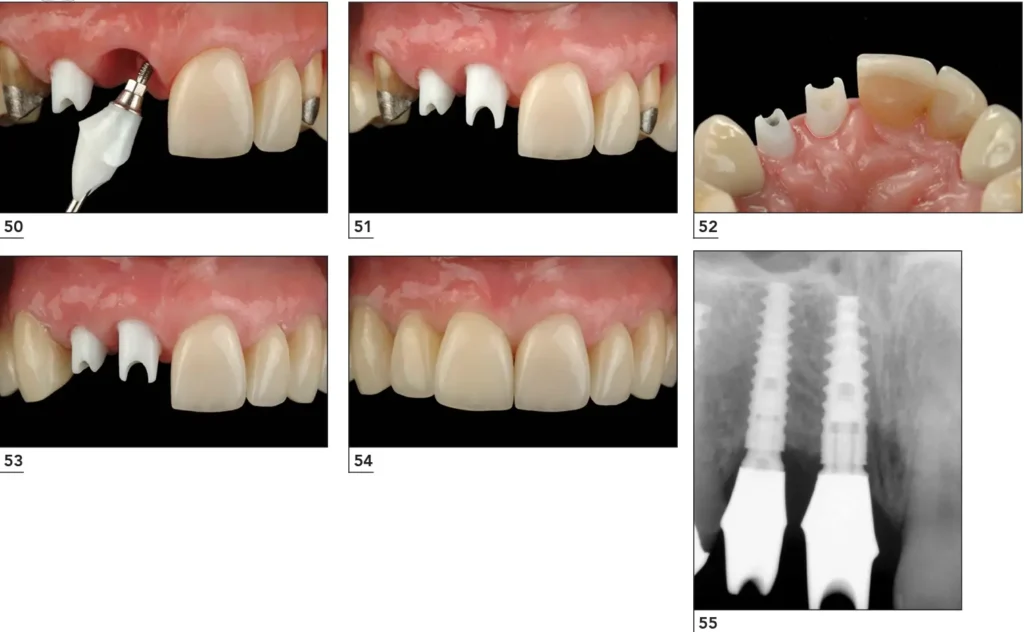
7 Risks of Dental Implants You Need to Know
Below are 7 important risks, analyzed according to each stage of treatment.
1. Inferior alveolar nerve injury (during surgery)
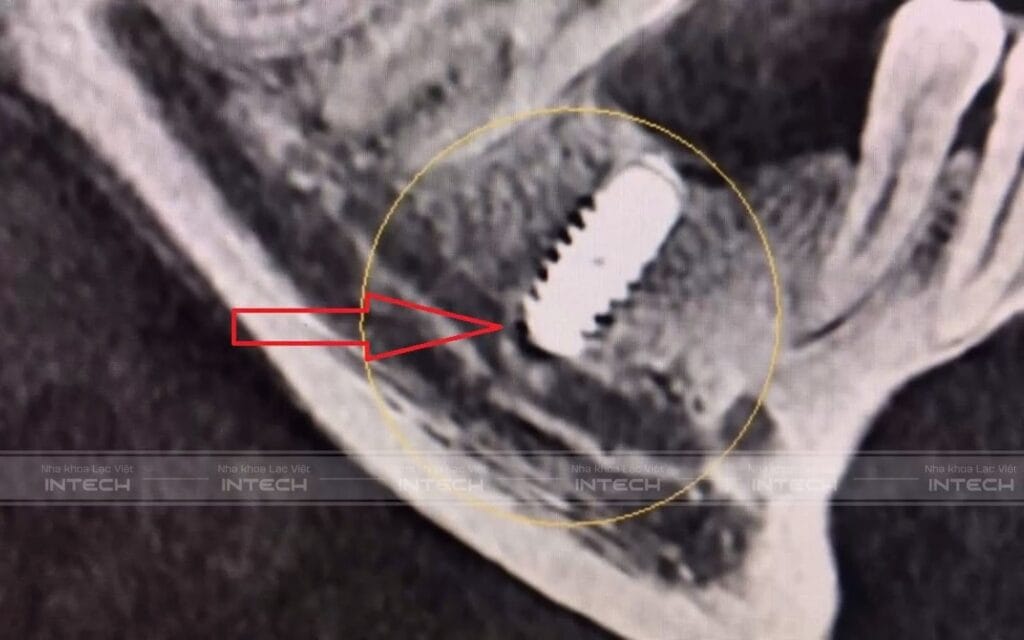
The inferior alveolar nerve lies within the mandibular canal, running from the mandibular foramen at the angle of the jaw, along the roots of the lower molars, and exiting through the mental foramen. This nerve provides sensation to the lower lip and lower teeth.
When placing implants in the lower molar region, if the doctor plans incorrectly or performs surgery poorly—due to lack of diagnostic equipment or absence of precise surgical support technologies—the drilling process may damage this nerve.
Possible consequences:
- Numbness of the lips and chin
- Loss of sensation
- In severe cases, long-term or permanent effects
To prevent this complication, the doctor must have a proper treatment plan, perform surgery accurately and gently, and especially use support such as surgical guides or X-Guide navigation systems.

2. Sinus perforation (upper molar region)
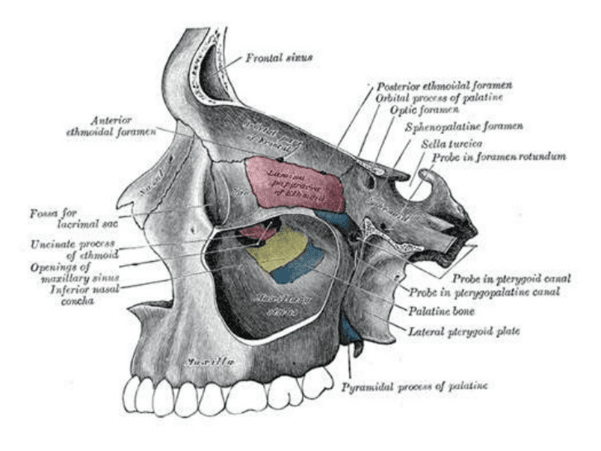
The maxillary sinus is an air-filled cavity located in the upper jaw, corresponding to the roots of the upper molars.
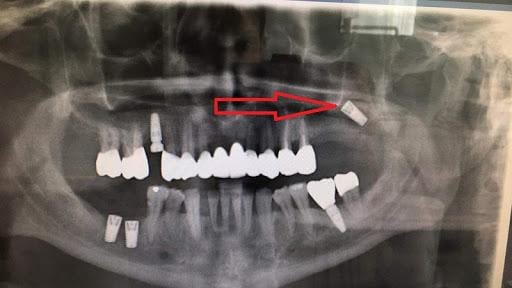
During implant placement in the upper molar area, if the implant is positioned incorrectly, it may penetrate the sinus.
Consequences:
- Sinus infection
- Prolonged pain
- Implant instability
Therefore, the doctor must carefully evaluate anatomy, develop a precise treatment plan, perform gentle and accurate surgery, and use advanced surgical technologies to prevent this risk.
3. Prolonged bleeding
This may occur during or after surgery.
Common causes:
- Surgical technique
- Underlying conditions (hypertension, coagulation disorders)
A comprehensive health evaluation is required before implant treatment.
4. Post-operative infection
Occurs when bacteria invade the implant site.
Symptoms:
- Swelling, pain, pus
- Implant mobility
- May require implant removal
Prevention requires strict sterilization and proper post-operative care.
5. Failure of osseointegration
This is the most common cause of early implant failure.
Causes:
- Poor or insufficient bone
- Low-quality implant
- Incorrect placement technique
- Systemic diseases
A personalized treatment plan and high-quality materials are essential.

6. Peri-implantitis (late complication)
Similar to periodontitis but occurs around implants.
Consequences:
- Bone loss around the implant
- Gum inflammation
- Implant loss over time
Good oral hygiene and regular follow-up are necessary.
7. Mechanical complications
Occur after the implant is in function.
Examples:
- Screw loosening
- Crown fracture
- Abutment fracture
Main causes are improper prosthetic design or incorrect force distribution.
Why Do These Risks Occur?
Most implant complications are not random but stem from 4 main causes:
- Inexperienced doctor:
Lack of experience may lead to incorrect planning, failure to identify risks, or inability to anticipate outcomes. Surgical execution may lack precision and finesse.
- Outdated technology (freehand placement):
Implant technology plays a crucial role in safety. Without it, surgery depends entirely on the doctor’s experience, making risk control much more difficult.
- Low-quality materials:
Poor implant quality may lead to failure of osseointegration or loss of integration over time. Low-quality abutments may cause gum inflammation, bad breath, screw loosening, or implant neck fracture. Poor-quality crowns may result in poor aesthetics or fractures over time.
- Incorrect patient evaluation
This means that risks are completely controllable.
How to Make Dental Implants Safe?
If you are wondering are dental implants safe, the answer largely depends on choosing the right place for treatment. A safe implant case does not come from advertising, but from a clinic’s ability to control risks at every stage.
To ensure safe implant treatment, the following are required:
Specialized implant doctor
Implant treatment is not simply placing a fixture into the bone. The doctor must be able to read CT scans, evaluate anatomy, plan treatment, control risks, and design proper prosthetics. Surgical skill is important, but correct diagnosis and indication are even more critical.
Accurate diagnostic and surgical technology
The jaw contains important structures such as the maxillary sinus and inferior alveolar nerve. Without proper diagnostic and navigation technology, the risk of incorrect placement increases. Technologies such as Cone Beam CT, surgical guides, or navigation systems help ensure precise placement and long-term stability.
>>> See more: Advanced Dental Implant Technologies at Lạc Việt Intech
Use of genuine implant materials
Implant quality affects both osseointegration and long-term durability. A good implant system must have clear origin, stable material quality, and compatible prosthetic components for future maintenance.
Clear treatment plan
A safe implant case cannot be done without planning. Patients must be clearly informed about bone condition, treatment plan, timeline, costs, and potential risks. The clearer the plan, the safer the treatment.
Long-term follow-up care
Implant treatment does not end after placement. Regular follow-up is necessary to monitor bone integration, soft tissue, occlusion, and signs of peri-implant disease. A responsible clinic will detect and manage problems early.
Especially for international patients, choosing the right Dental Implant Clinic Vietnam is almost decisive for the final outcome, because what you need is not just a clinic that performs implants, but one that ensures safety, planning, and long-term responsibility.
Conclusion
So, are dental implants safe – are dental implants safe?
👉 The answer is: Yes – if done correctly
Dental implants are not a simple procedure but a complex treatment system that requires high precision and strict risk control.
Understanding the risks is not meant to create fear, but to help you choose the right solution – the right doctor – the right clinic.
FAQ – Frequently Asked Questions
1. Are dental implants dangerous?
Not dangerous if performed correctly according to proper indications.
2. What are the biggest risks of dental implants?
Nerve injury, sinus perforation, failure of osseointegration, and peri-implantitis.
3. Can complications be prevented?
Yes, if you choose the right clinic and follow proper care.
4. Should you choose low-cost implants?
No, because lower cost often comes with higher long-term risks.
Looking for a Safe Dental Implant Clinic in Vietnam?
If you are searching for a trusted Dental Implant Clinic Vietnam, the most important factor is not price—it is safety, precision, and long-term outcomes.
At nha khoa lạc việt intech, implant treatment is planned and executed with a strict protocol, combining experienced specialists, advanced technology, and personalized solutions to ensure predictable and long-lasting results.
👉 Book a consultation today to get a personalized implant treatment plan.
Pingback: 3 Serious Dental Implant Complications: Infection, Nerve & Sinus Damage