
Over the past 10 years, Vietnam has emerged as a destination for dental tourism in Asia. Reasonable costs, flexible treatment timelines, and well-trained dentists have led many patients from the US, Australia, Canada, Europe, or overseas Vietnamese to choose Vietnam for implant treatment.
However, like any medical decision, choosing to undergo implant treatment abroad—especially with geographical distance—inherently carries risks that patients need to fully understand before making a decision.
This article is not meant to “warn,” but to help you clearly see 5 real risks, so you can make a smart, safe, and sustainable choice.
Risk #1: Implant complications may occur – geographical distance makes handling more difficult
Dental implants are a fixed restorative solution with long-term durability. However, it is important to understand: implants are not “permanent without any issues.”
Over years of use, the following may occur:
- Loosening of the prosthetic screw
- Chipping or fracture of the crown
- Peri-implant inflammation
- Bone loss around the implant
- Occlusal changes over time
For patients living in Vietnam, follow-up visits and management are relatively convenient. But for international patients, flying thousands of kilometers just to fix a loose screw or adjust a restoration is not simple.
Why does this risk exist?
An implant system consists of 3 parts: the fixture (in bone) – the abutment – the crown. If any of these three components are not optimally designed from the beginning (especially occlusion and load direction), complications may arise after 2–5 years.
Geographical distance leads to:
- Delayed timely management
- Not all local dental clinics are willing to intervene in cases treated elsewhere
- Unexpected additional costs
How to prevent
International patients should:
- Choose a clinic with a clear treatment plan and a comprehensive solution, not just implant placement but also restoration and occlusal control
- Prioritize clinics with modern technology to ensure precise implant positioning and reduce angulation errors
- Select implant-specialized dentists with experience in complex cases
- Ensure materials are high-quality, genuine, and with clear origin
- Ask clearly about warranty and remote support policies
A well-planned implant case from the beginning significantly reduces the likelihood of future “repairs.”

Risk #2: Inconsistent professional standards among clinics – advertising may differ from reality
The dental market in Vietnam is growing rapidly. This creates opportunities but also leads to inconsistency in expertise and facilities.
You may see many advertisements:
- “Unexpectedly cheap implants”
- “Teeth in one day”
- “Lifetime warranty”
But the key question is: do these claims reflect actual clinical reality?

Risks if you choose incorrectly
- Poor aesthetic outcomes
- Incorrect implant positioning or angulation
- Failure to control anatomical structures (sinus, nerves)
- Even complications such as nerve injury or severe infection
For international patients, this risk is even greater because you cannot easily “visit and check” like a local patient.
Checklist for international patients
Before deciding, you should verify:
- Is the clinic legally licensed?
- Are the facilities truly modern or just marketing images?
- Are advanced implant technologies actually being applied, such as personalized implant solutions, magnetic technology, high-frequency ultrasound, etc.?
- Is there a 3D CBCT imaging system?
- Is there a digital scanning system?
- Is the dentist specialized in implantology or practicing general dentistry?
- Is there transparency in treatment planning, pricing, and materials used?
- Can you have a direct online consultation with the dentist before traveling?
Do not decide based only on price or advertising. Decide based on actual capability and transparency. The best dental implant clinic in Vietnam must meet at least the above standards
>>> See more: What is the DCT personalized implant solution?
Risk #3: Non-genuine materials – consequences may appear after 3–5 years
An implant is a medical device placed inside the body. If materials do not meet standards, consequences may not appear immediately but can develop silently over years.
What can happen with non-genuine materials?
- Poor osseointegration
- Surface corrosion
- Loose connections
- Peri-implant inflammation
- Progressive bone loss over time
The dangerous aspect is: when detected, it may already be too late.
Why does this risk exist?
The market includes:
- Parallel-imported products
- Products with unclear origin
- Systems mimicking major brands
- Materials lacking proper documentation
What should patients do?
- Request clear information about the implant system used
- Verify CO (Certificate of Origin) and CQ (Certificate of Quality)
- Confirm whether the material is licensed by the Vietnamese Ministry of Health
- Request invoices and related documentation
Implant treatment is a 10–20 year investment—do not trade long-term health for short-term savings.
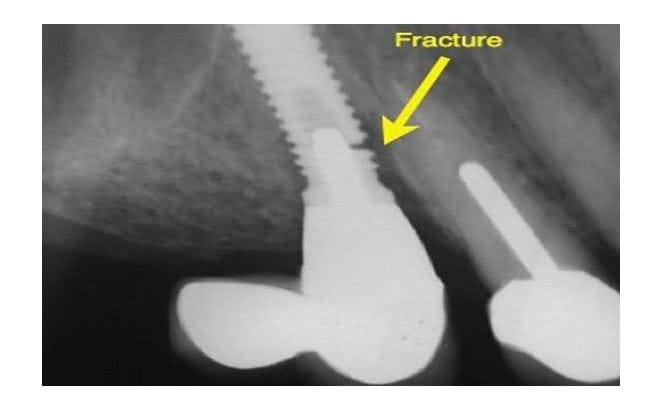
Risk #4: Outdated treatment technology – causing more pain, trauma, suboptimal results, and even severe complications
Not all clinics update to new technologies. Some still use methods such as:
- Freehand implant placement based on estimation
- No digital navigation
- No scanning system
- Poor control of drilling force and depth
Possible consequences
- Greater tissue trauma
- Prolonged swelling and pain
- Misaligned implant placement
- Suboptimal occlusion
- Reduced restoration longevity
- Severe complications such as inferior alveolar nerve injury or sinus complications
Especially in cases such as:
- Severe bone loss
- Sinus lifting
- Full-arch implant rehabilitation
Modern technology plays an extremely important role.
How to prevent
International patients should evaluate:
- Availability of 3D CBCT imaging
- Use of precise implant placement technologies such as surgical guides or X-Guide navigation
- Use of magnetic surgery or high-frequency ultrasound for low bone density or sinus lift cases
- Availability of digital scanning and design systems
- Use of implant surface treatment technology (e.g., plasma) or quantitative osseointegration measurement systems
Technology is not for “show,” but to reduce risk and increase precision.
>>> See more: Implant technologies applied at Lac Viet Intech
Risk #5: Inconsistent pricing – unexpected additional costs
Vietnam offers a significant price advantage for implants compared to the US, Australia, or Europe—often 50–70% lower. However, low cost does not always mean transparency.
Potential issues
- Initially low quote but additional costs arise
- Bone grafting or sinus lift not included
- Abutment not included
- High-quality crowns not included
- Repair costs not disclosed in advance
This can cause the total cost to exceed the expectations of international patients.
How to prevent
- Request detailed itemized pricing
- Clarify what is included and not included
- Ask about policies for managing complications
- Request written commitments
Transparency from the beginning determines long-term peace of mind.
Conclusion: Vietnam is a good choice – if you choose correctly
Vietnamese dentistry, especially in implantology, has made significant progress over the past 10–15 years. Many dentists are internationally trained, technologies are increasingly advanced, and procedures are becoming more standardized.
From a professional standpoint, implant treatment in Vietnam is now approaching the level of many developed countries, while costs remain significantly lower.
This makes choosing Vietnam for dental implants an economically smart decision.
However:
- Not all clinics are the same
- Not all advertisements reflect reality
- Not all low prices are advantageous
Choosing dental implant treatment in Vietnam is a good decision—but only when you choose correctly:
- Legally compliant clinic
- Specialized dentists
- Modern technology
- Genuine materials
- Transparent pricing
- Long-term accountability
Medicine is not a place to rely on luck.
Make decisions based on knowledge—not emotion.
And when you choose correctly, Vietnam can absolutely provide you with a safe – durable – aesthetic – functional outcome for many years to come.
Related reading for international patients
If you are comparing treatment options, you may also find these guides helpful: What are the risks of teeth implants?, How to Choose the Best Dental Implant Clinic in Vietnam (2026 Checklist) and 5 Important Criteria to Ensure Safe and Sustainable Dental Implant Placement.
Frequently asked questions
The biggest risks of dental implants in Vietnam usually involve choosing a clinic based only on price, receiving incomplete treatment planning, unclear information about implant materials, or limited long-term follow-up support.
Yes. Patients can reduce risks by reviewing the treatment plan in advance, confirming the dentist’s qualifications, asking about implant materials and warranties, and comparing technology and sterilization standards between clinics.
No. Dental implant treatment in Vietnam is not inherently risky. The outcome depends more on the clinic’s expertise, the dentist’s experience, treatment planning quality, and the complexity of the case rather than the country itself.
Pingback: What Are Dental Implants? Structure, Process & Risks Explained
Pingback: Teeth Implant Risks: What International Patients Should Know
Pingback: Dental Implants in Vietnam: 6 Things International Patients Should Understand First