
The 3D Pro Multilayer ceramic crown is currently the latest generation of dental ceramics, researched and developed by Denjoy (Germany), offering numerous advantages and being particularly suitable for implant-supported restorations. It was developed through the application of molecular electrophoresis technology in the production of Zirconia.
1. What is the 3D Pro Multilayer ceramic crown?
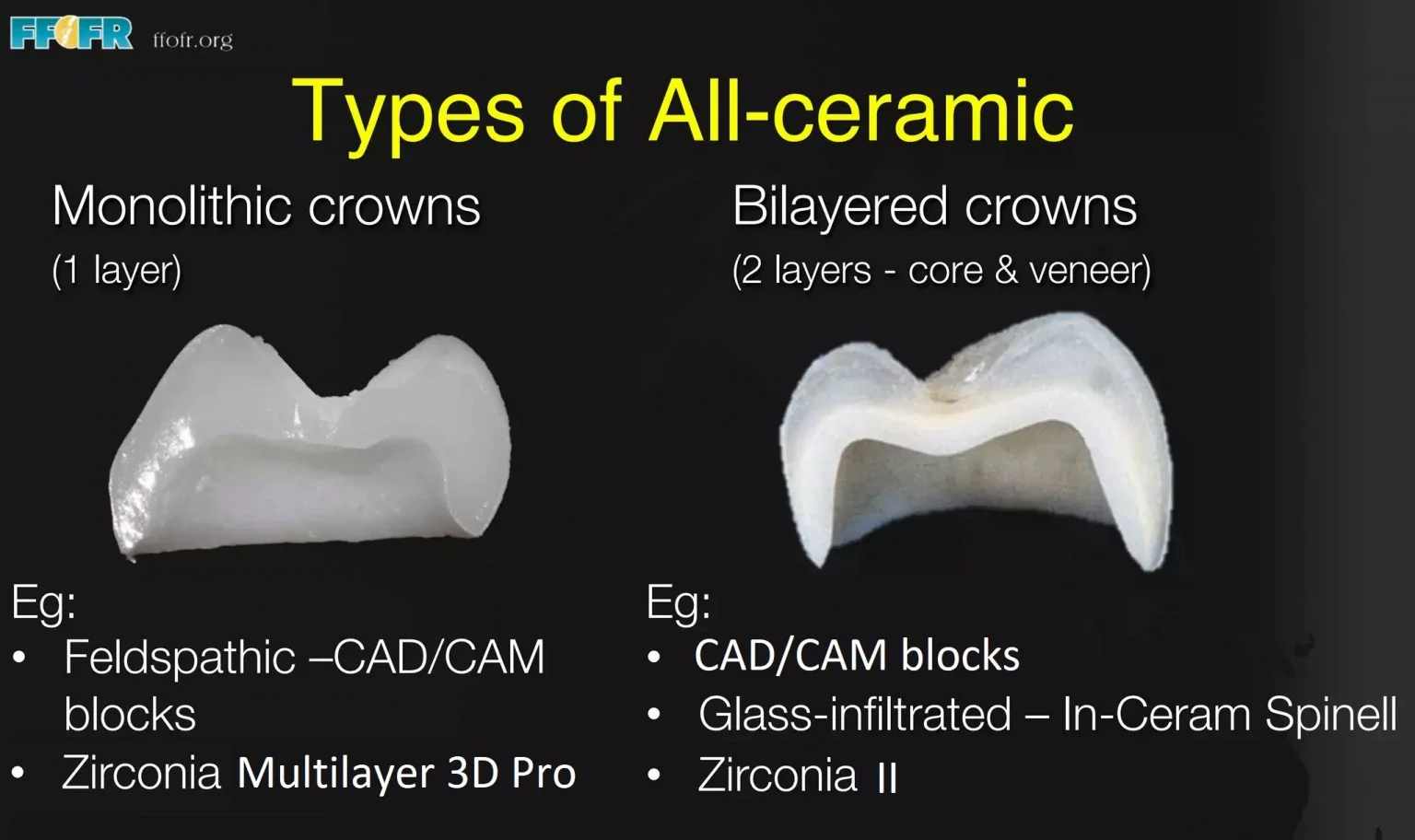
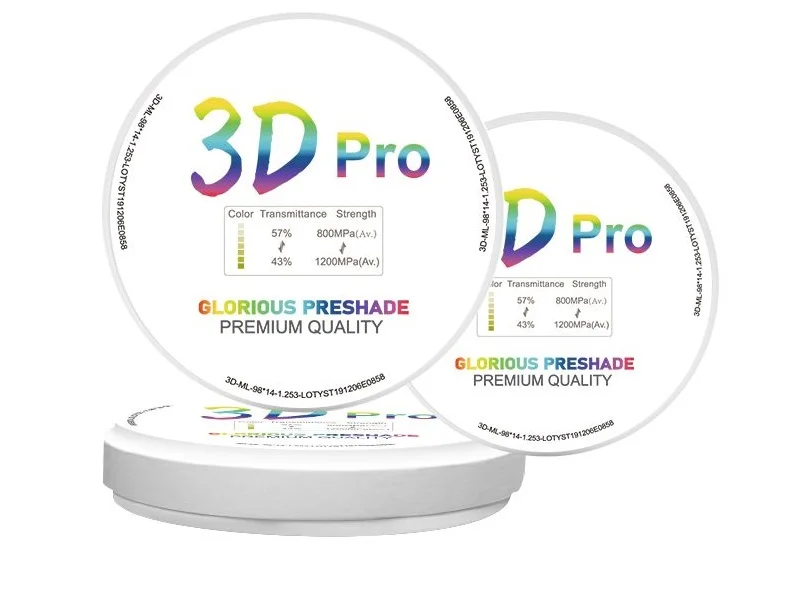
3D Pro Multilayer (3D Pro ML) is a type of ceramic crown created specifically for implant prosthodontics. Unlike current ceramic crowns which are fabricated from two different material layers, 3D Pro ML is made of 100% multilayer zirconia as a homogeneous monolithic block.
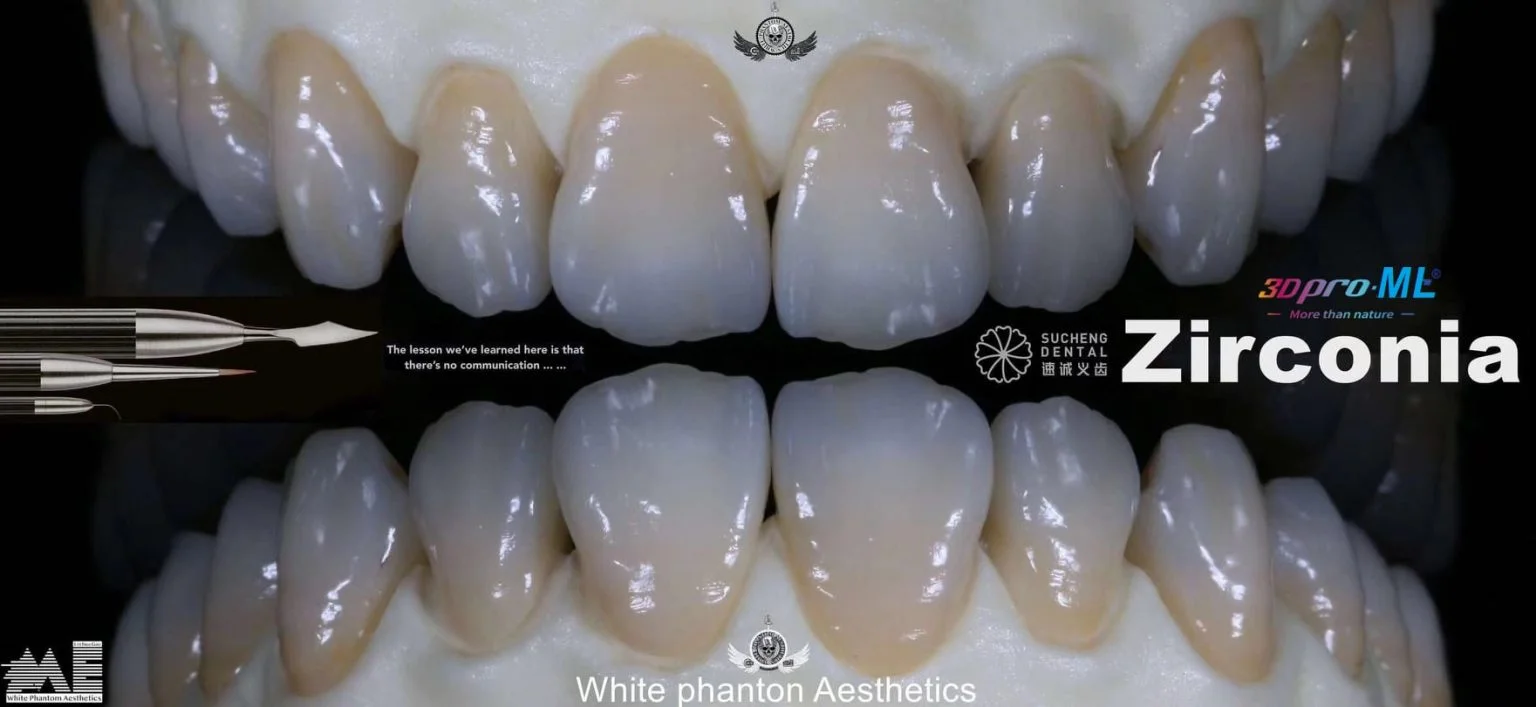
To date, 3D Pro ML is the ceramic crown that possesses the most properties resembling natural teeth.
2. Fabrication Materials and Manufacturing Methods of 3D Pro ML Ceramic Crowns
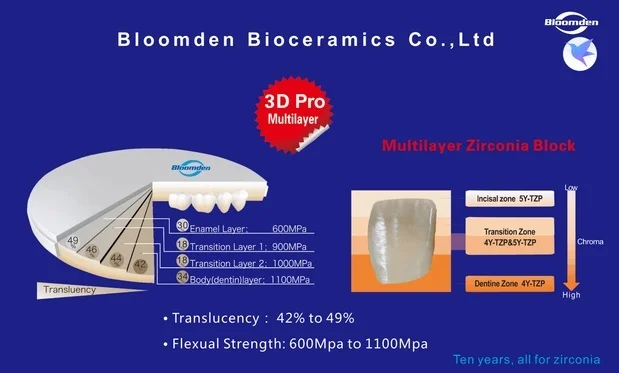
3D Pro ML ceramic crowns are fabricated from multilayer zirconia material; this is a completely different type of zirconia compared to the zirconia used in older-generation zirconia-core all-ceramic crowns. A zirconia blank used to manufacture 3D Pro ML typically consists of 5 to 6 layers; these layers are created by superimposing countless layers of zirconium oxide molecules. In each layer, the density of zirconium oxide molecules varies, thereby yielding different levels of hardness, color, light transmission and refraction, wear resistance, and flexural elasticity.

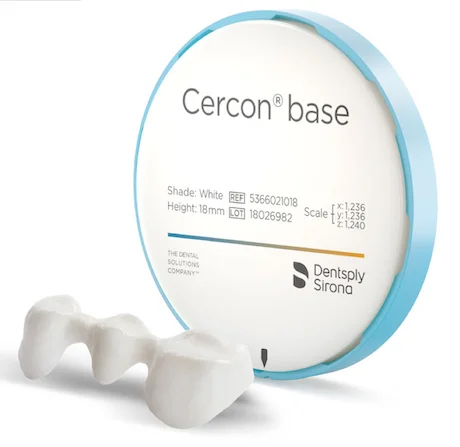
The reason previous zirconia blanks lacked these properties is that they were produced as a single monolithic layer. Today, by applying molecular electrophoresis technology to zirconia production, manufacturers can stretch the distance between zirconium oxide molecules in different layers and superimpose multiple molecular layers sharing a common attribute, thereby creating a generation of multilayer zirconia with gradient properties. Regarding the manufacturing method, 3D Pro ML is produced entirely using CAD/CAM technology, designed on a computer, and milled completely by robotic systems, eliminating the need for an external porcelain veneering layer as seen in conventional ceramic crowns.
3. Advantages and Disadvantages of 3D Pro Multilayer Ceramic Crowns
Before discussing the advantages and disadvantages of 3D Pro ML ceramic crowns, let us examine the properties of a natural tooth. Our natural tooth enamel possesses the following attributes:
- Regarding color: Human tooth enamel is not uniform; it tends to be yellower and darker at the cervical region, gradually becoming lighter and whiter towards the incisal edge (occlusal surface).
- Regarding translucency: Enamel has a certain degree of translucency, and this translucency also varies, being more translucent at the incisal edge (occlusal surface) and gradually decreasing towards the cervical region.
- Regarding hardness: The hardness of a natural tooth is also heterogeneous, being harder at the cervical region (from 900 – 1200 MPa) and softer at the incisal edge (occlusal surface) (approximately 500 – 650 MPa).
- Regarding elasticity: Enamel has a maximum modulus of elasticity (resilience) during mastication of 83 GPa; this resilience (elasticity) of enamel helps to better disperse masticatory forces, preventing trauma that causes enamel chipping or fractures of the clinical crown and root.
- Enamel wear resistance: Enamel will undergo attrition when masticating or rubbing against materials with a hardness exceeding 1,250 MPa.
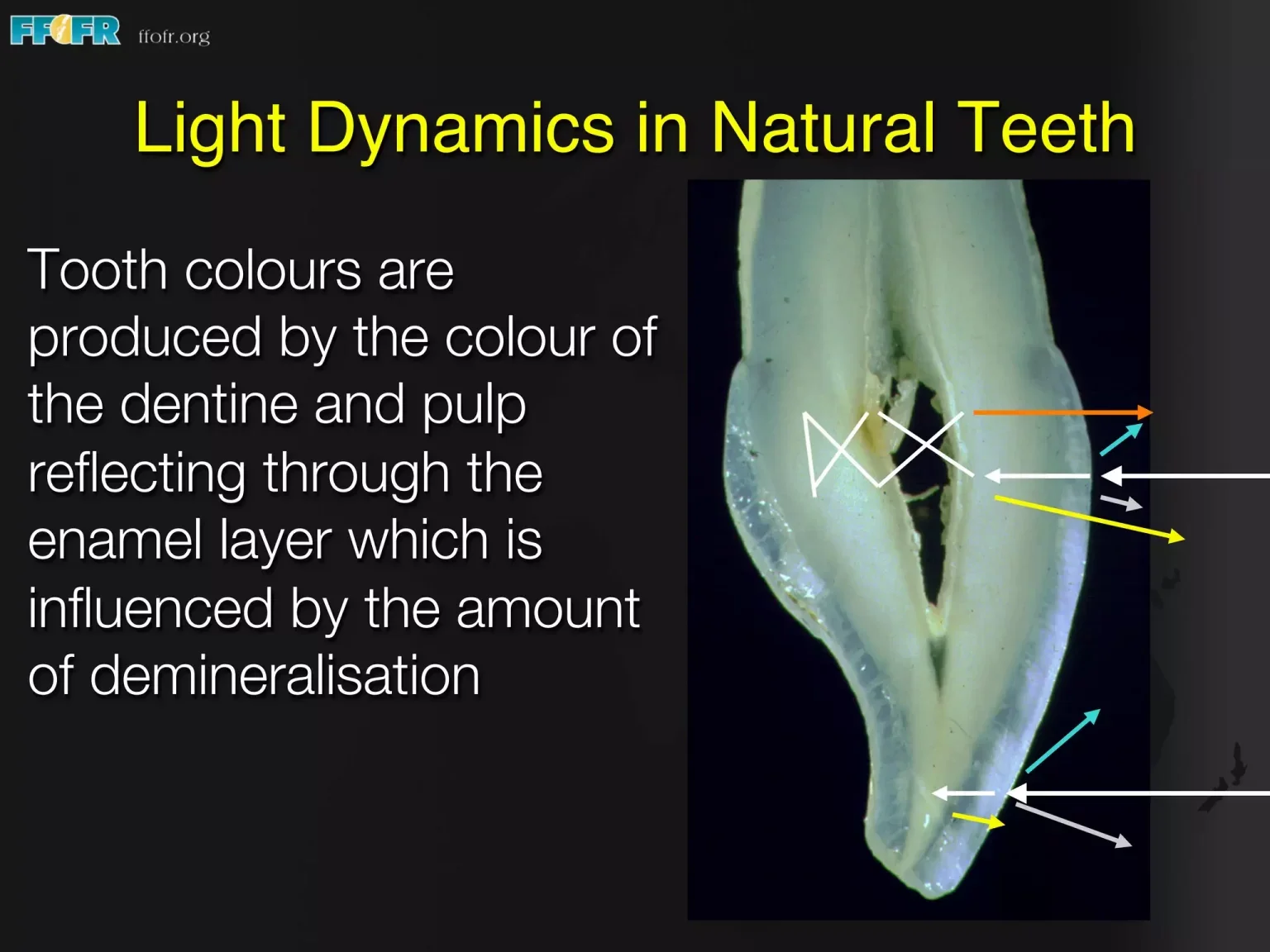
Currently, 3D Pro ML is the ceramic crown with properties closest to those of natural teeth. For readers comparing this material with other types of implant-supported crowns, the main differences lie in its monolithic structure, gradient properties, and biomechanical compatibility.
3.1 Highest Durability Among All Ceramic Crowns Due to Fracture Resistance
Being manufactured from a single monolithic zirconia material—which possesses exceptionally high fracture resistance due to its molecular stretching capabilities—the 3D Pro ML ceramic crown is virtually immune to fracture under the impact of masticatory forces. In contrast, titanium porcelain crowns and zirconia-core all-ceramic crowns are fabricated from two materials: an internal load-bearing core (which can be titanium or single-layer zirconia) and an external porcelain layer. These two materials are bonded together by an opaque adhesive, rendering them susceptible to delamination during mastication. Furthermore, although veneering porcelain has high hardness, it is extremely brittle.

3.2 Excellent Aesthetics
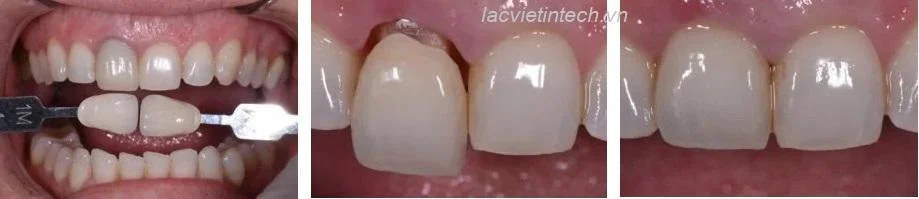
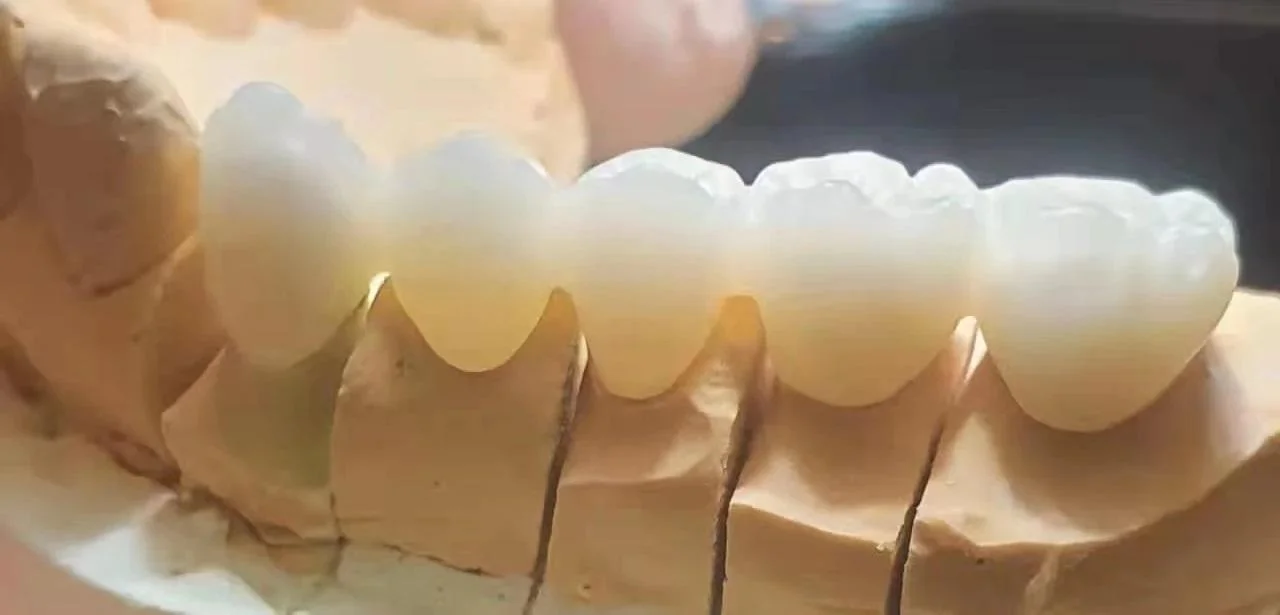
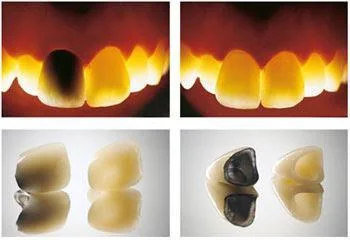
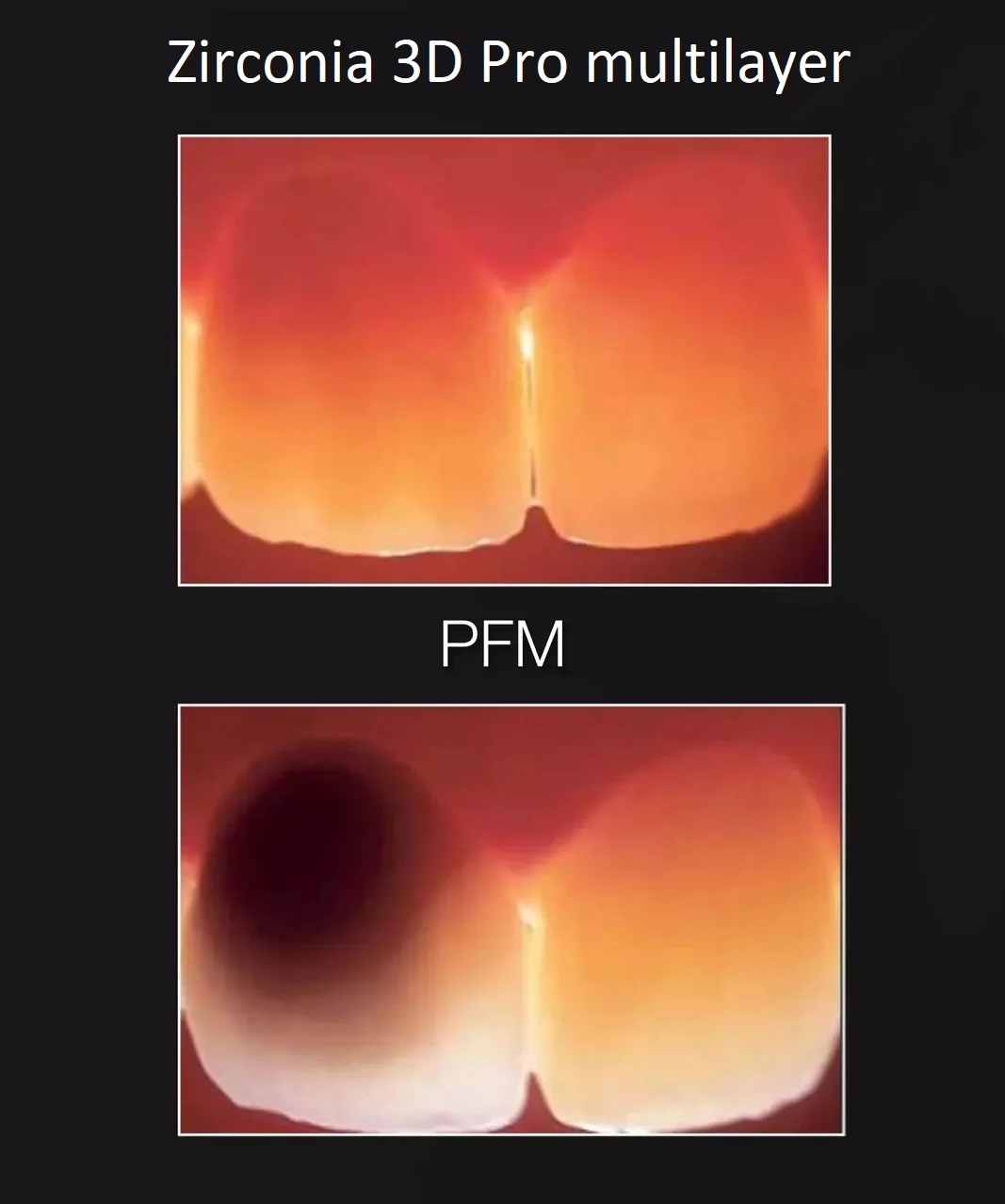
Regarding color: 3D Pro ML is the only ceramic crown that provides a color perfectly mirroring natural teeth without the need for additional porcelain layering. Within each multilayer zirconia blank, a color gradient is pre-encoded from the incisal edge to the body and cervical region; it is lighter at the incisal edge, gradually becoming yellower and darker at the cervical margin. Consequently, when utilizing 3D Pro ML, the clinician simply needs to select the correct natural tooth shade of the patient, and the post-production color will be highly harmonious and perfectly match the natural teeth.
For older generations of ceramic crowns, to create a color gradient, dental technicians had to externally layer porcelain; this layer functioned to create color and translucency, as well as to lower the surface hardness of the internal monolithic framework. However, this manual layering process results in imperfect aesthetics and makes the additional veneering porcelain susceptible to chipping and delamination.
Regarding translucency: 3D Pro ML is a ceramic crown with translucency that completely matches natural enamel and dentin, making this type of crown appear the most “natural” among all dental ceramics. The translucency of 3D Pro ML is pre-set within the multilayer zirconia blank; it is automatically configured to achieve a 57% translucency at the incisal aspect, gradually decreasing to 32% at the cervical aspect. 3D Pro ML possesses this attribute because it is fabricated from a multilayer zirconia block where the layers have varying densities of zirconium oxide molecules, thereby leading to different luminous effects. Not only does it match natural teeth in natural lighting environments, but Multilayer also exhibits identical light dynamics to natural teeth under all lighting conditions.
3.3 Safest for Antagonist Teeth and Underlying Implant Fixtures
3D Pro ML is the ceramic crown with biomechanical properties most similar to natural teeth, making it the safest option for adjacent and opposing structures.
- Does not cause trauma to antagonist teeth. The 3D Pro ML ceramic crown features a 5-layer gradient hardness; this attribute perfectly coincides with that of a natural tooth. Because the hardness at the incisal edge and occlusal surface is only 650 MPa—equivalent to natural enamel—3D Pro ML does not cause occlusal trauma to the opposing teeth during mastication. Conversely, other types of crowns have higher hardness levels than natural teeth; their use will induce trauma to the antagonist teeth, potentially leading to chipping, clinical crown or root fractures, and alveolar bone resorption.
- Does not cause wear to antagonist teeth. Because its hardness matches that of enamel, and it is structured as a network of countless superimposed zirconium oxide layers, 3D Pro ML does not cause attrition to the antagonist teeth, even after 10 to 15 years of mastication (According to a 2022 study by Paulo Malo). Meanwhile, other ceramic crowns are excessively hard and are veneered with porcelain—a material that is very hard yet brittle—which will abrade the opposing natural enamel over time, consequently causing hypersensitivity and damage to the antagonist teeth.
- Provides shock absorption for the implant fixture and underlying abutment. The elasticity (resilience/flexural modulus) of 3D Pro ML reaches 93.7 GPa, offering slightly higher resilience compared to a natural tooth (natural tooth is 83 GPa), making it highly suitable for implant-supported crowns. With its elastic capability, upon application of masticatory forces, the 3D Pro ML ceramic crown can minimize mechanical impacts on the underlying structures, such as the implant fixture or abutment, thereby better protecting these structures from biomechanical overload.
These properties align closely with the broader criteria for evaluating the quality of a ceramic crown, especially when judging hardness, translucency, wear behavior, and elasticity in relation to natural teeth and implants.
3.4 Optimal Food Shearing and Masticatory Efficiency
Due to its high elasticity and tensile strength (referred to as “toughness”), 3D Pro ML is highly resistant to fracture. It wears down layer by layer, ensuring the anatomical structures of the crown do not chip away, which prevents the loss of masticatory and shearing efficiency over time—a common issue with other ceramic types.
3.5 Most Suitable for Implant-Supported Restorations
As a ceramic material specifically created for implant dentistry, in addition to the aforementioned properties, the 3D Pro ML zirconia blank also boasts a substantial thickness of up to 22 mm (whereas other types typically have a maximum thickness of only 15 mm). This accommodates implant-supported crowns, which generally require a greater thickness compared to conventional crowns or bridges on natural teeth.
In conclusion, 3D Pro ML is the most perfect ceramic crown for dental implants; naturally, it is also an excellent choice for conventional crowns or veneers on natural teeth. Its sole disadvantage is its high cost. However, the ceramic crown can only fully maximize its advantages when the implant fixture is placed in the correct three-dimensional position and a customized abutment is utilized. A poor-quality abutment combined with an improperly positioned implant fixture will fail to deliver optimal clinical outcomes, even if 3D Pro ML is used.
For that reason, clinicians should evaluate not only the crown itself but also the supporting prosthetic abutment criteria and the digital workflow or implant technology used to place the implant and design the final restoration.
FAQ: 3D Pro Multilayer Ceramic Crowns
What is a 3D Pro Multilayer ceramic crown?
3D Pro Multilayer is a monolithic multilayer zirconia crown developed specifically for implant prosthodontics. Unlike bilayer crowns, it is fabricated from 100% multilayer zirconia as a homogeneous block.
Why is 3D Pro ML considered close to natural teeth?
Because it combines gradient color, translucency, hardness, wear behavior, and flexural elasticity in a way that more closely resembles natural enamel and dentin than older ceramic systems.
Why is 3D Pro ML suitable for implant-supported restorations?
It offers high fracture resistance, more natural wear behavior, and elastic properties that help reduce mechanical trauma to antagonist teeth, abutments, and implant fixtures.
What is the main disadvantage of 3D Pro Multilayer ceramic crowns?
Its main disadvantage is higher cost. In addition, the crown can only deliver its full benefits when the implant is positioned correctly and combined with a high-quality customized abutment.