
When researching dental treatment abroad, one of the first questions international patients ask is: is dental treatment safe in Vietnam? This is a completely valid question, because what patients need is not just low cost. What they truly need is a place that provides safe, transparent, sustainable, and responsible treatment.
In reality, Vietnam is gradually becoming a notable destination on the Asian dental tourism map. Competitive treatment costs, increasingly well-trained dentists, rapidly advancing dental technology, and flexible treatment timelines are clear advantages. However, like many developing private healthcare markets, the quality among clinics in Vietnam is not uniform. Therefore, to properly answer the question is dental treatment safe in Vietnam, we cannot respond with a simple “yes” or “no.” A more accurate answer is: it can be very safe, if patients choose the right dental system.

Is dental treatment safe in Vietnam? How should this question be properly understood?
At a national level, Vietnam has sufficient foundations to provide safe dental services for international patients. The dental education system has developed over many years, the large number of clinical cases allows many dentists to gain strong hands-on experience, and modern technologies such as Cone Beam CT, CAD/CAM, 3D printing, X-Guide navigation systems, and digital patient record software are gradually becoming new standards in private dentistry.
However, at the clinic level, the quality gap is significant. There are centers that follow a specialized, personalized, and transparent treatment philosophy with strict risk control. On the other hand, there are also clinics that compete mainly on low prices, cut down procedures, use materials of unclear origin, or perform treatments beyond their professional capacity.
Therefore, when a patient asks is dental treatment safe in Vietnam, the most important thing to understand is: safety does not lie in the name of the country, but in the specific dental system you choose.
Vietnam dental clinics quality: What is the current quality of dental clinics in Vietnam?
To properly evaluate Vietnam dental clinics quality, the market can be divided into three fairly clear tiers.
The first group consists of specialized clinics or systems that invest heavily in doctors, technology, and processes. These usually have clear specialization, meaning implant dentists focus on implants, orthodontists focus on orthodontics, and prosthodontists focus on restorations. This is very important because modern dentistry is no longer a field where one dentist can excel at everything simultaneously. These clinics also typically have strong imaging systems, well-structured sterilization protocols, digital treatment workflows, and the ability to clearly explain treatment plans to patients.
The second group includes mid-level clinics that can perform routine cases well but are not particularly strong in complex cases. Their limitations often lie in a lack of technological depth or the absence of a standardized system from diagnosis to post-treatment follow-up.
The third group consists of low-cost clinics. This is where international patients need to be most cautious. Unusually low prices in healthcare are rarely without reason. They may result from lower-quality materials, less experienced dentists, shortened procedures, or a lack of investment in technologies that reduce errors and complications.
Therefore, when discussing Vietnam dental clinics quality, the most accurate statement is not “Vietnam is good” or “Vietnam is not good,” but rather: Vietnam has both very good clinics and high-risk ones. Patients need to know how to distinguish between them.
Are dental implants in Vietnam safe? A professional perspective
Among the services that international patients are most interested in, dental implants almost always rank at the top. And this is also the field that raises the most concerns. Therefore, the question dental implants in Vietnam safe appears very frequently.
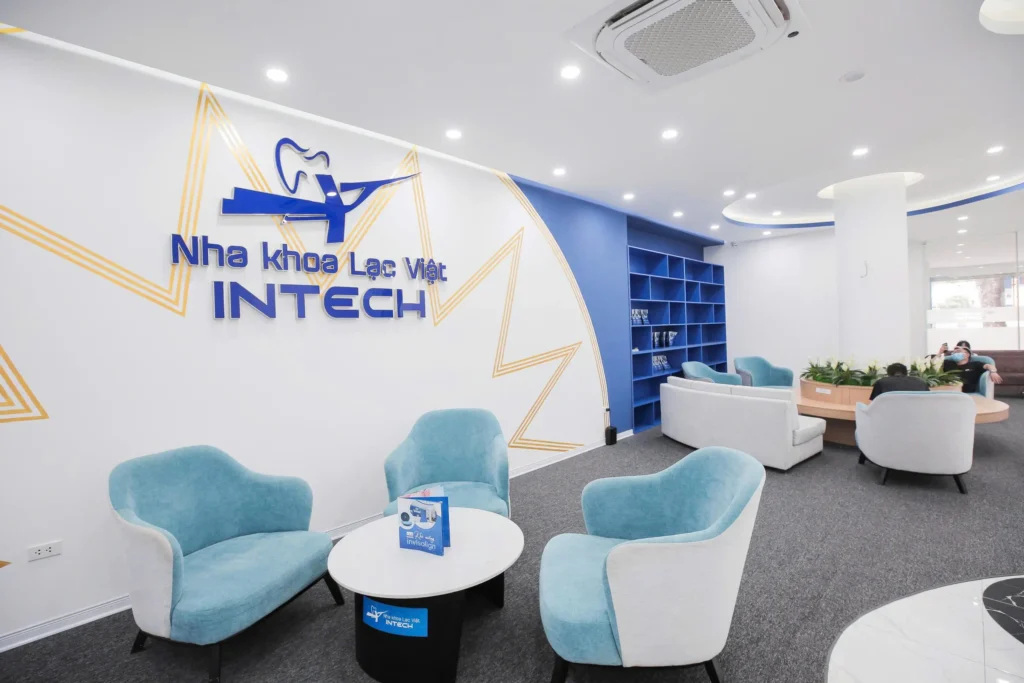
From a professional perspective, implants are a highly safe method of tooth replacement if performed correctly. However, patients need to understand one very important point: a successful implant case is not just about placing a fixture into the jawbone. An implant is only considered successful when it simultaneously meets multiple criteria: good osseointegration, stable chewing function, natural aesthetics, ease of hygiene, minimal inconvenience during use, and long-term durability. This is also the approach emphasized by Lạc Việt Intech.
Complications that patients often fear, such as nerve injury, sinus damage, implant failure to integrate, peri-implantitis, screw loosening, prosthetic fracture, or food impaction, are not because “implants are dangerous,” but mainly due to poor planning, inaccurate placement, inappropriate materials, or insufficient personalization of the prosthetic phase.
In other words, the question dental implants in Vietnam safe should be reframed into a more precise question: are implants at that clinic performed by qualified doctors, using appropriate technology, standardized materials, and strict protocols?
Vietnam dental tourism pros and cons: A balanced view
Anyone considering dental treatment in Vietnam should have a balanced understanding of Vietnam dental tourism pros and cons.
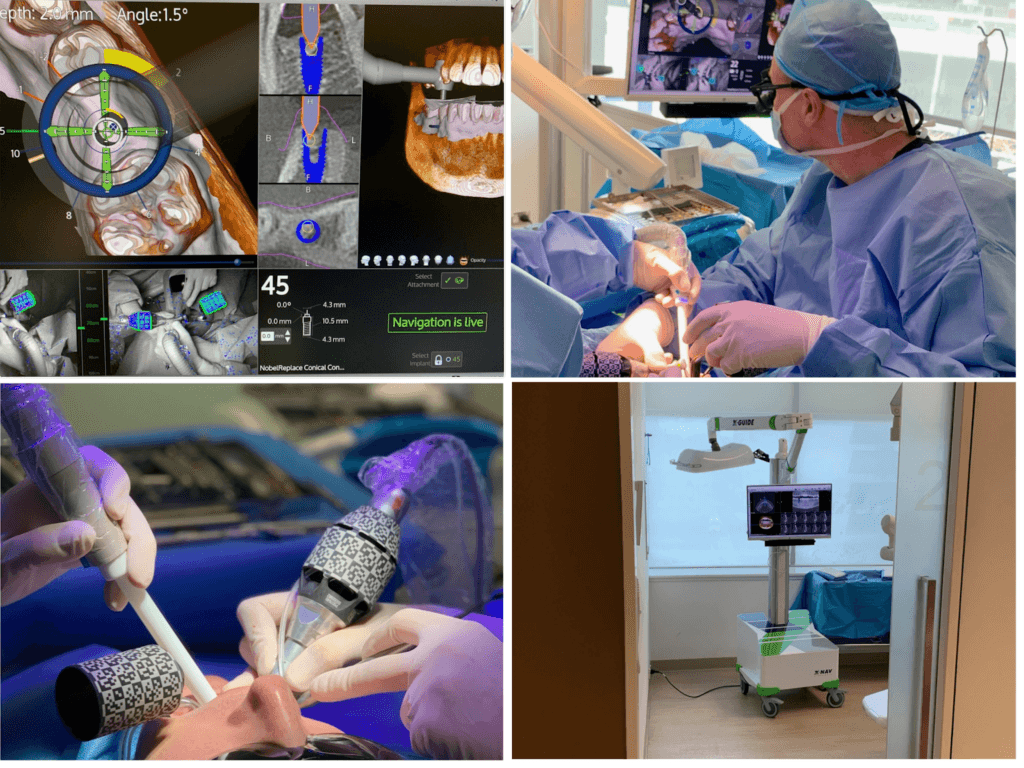
In terms of advantages, Vietnam has a significant cost advantage. Compared to the US, Australia, Canada, or Europe, the cost of the same advanced dental services in Vietnam is often much lower. This allows patients to access treatment plans that they might otherwise postpone for years due to high costs. In addition, many private dental systems in Vietnam are rapidly adopting new technologies. Some centers have implemented technologies previously only seen in developed markets, such as Cone Beam CT, navigation systems, CAD/CAM, 3D printing, surgical guides, and personalized workflows.

Another advantage is that Vietnamese dentists often have extensive practical clinical experience due to the high volume of cases. For specialized dentists, this is a significant benefit. Additionally, Vietnam is convenient for many international patients due to flexible stay durations and relatively affordable and accessible services such as accommodation, transportation, and food.
However, the biggest disadvantage is the uneven quality of the market. Patients from abroad may find it difficult to distinguish truly high-quality clinics from those with strong marketing. Furthermore, some dental tourism patients want to “complete everything in one trip,” while certain treatments, especially implants, inherently require time due to biological processes. If influenced by exaggerated advertising, patients may make the wrong choice.
Therefore, understanding Vietnam dental tourism pros and cons helps patients avoid two common mistakes: being overly fearful and missing good treatment opportunities, or being overly optimistic and underestimating risks.
What truly determines the safety of dental treatment in Vietnam?
If we simplify the concept of dental tourism Vietnam safety into its core elements, it can be summarized into four pillars: doctors, technology, materials, and post-treatment follow-up.
Doctors
In healthcare, the greatest value is not the equipment or the building, but the professional competence of the practitioner. A good dentist not only performs procedures but also makes correct indications, anticipates risks, and knows when to treat and when not to. A good treatment plan always starts with accurate diagnosis.
Technology
Technology does not replace doctors, but good technology helps reduce errors. In implant dentistry, even a deviation of a few millimeters can lead to serious consequences involving nerves, sinuses, aesthetics, or long-term durability. The better the technology, the greater the ability to control these errors.
Materials
An implant case involves more than just the implant fixture. It also includes healing abutments, prosthetic abutments, crowns, bone graft materials, and other components. If materials are substandard, of unclear origin, or inappropriate, biological risks and mechanical failures increase.
Follow-up and responsibility after treatment
This is a factor often overlooked by international patients. A good dental system is not only effective during treatment but must also be capable of monitoring, managing complications, and providing a clear maintenance plan. This is especially important for patients who live far away.
>>> See more: Advanced Dental Implant Technologies at Lạc Việt Intech
Why is technology important when answering the question is dental treatment safe in Vietnam?
In dentistry, especially implantology, technology is not merely a marketing tool. Proper technology is a tool that enables more accurate diagnosis, clearer planning, less invasive intervention, and better control of outcomes.
If a clinic relies mainly on manual techniques without 3D analysis, lacks navigation tools, and does not personalize the prosthetic phase, then even experienced dentists face significantly higher risks of error. Clinical studies have emphasized that freehand implant placement has a higher error rate, leading to positional inaccuracies, suboptimal force distribution, and impacts on both safety and long-term durability.
Therefore, when patients ask is dental treatment safe in Vietnam, one practical way to answer is to evaluate what technologies are used, at which stages, and how they help control risks.
What technologies is Lạc Việt Intech applying to enhance safety?
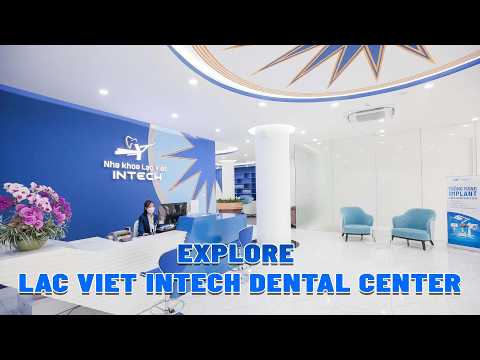
One aspect that international patients often appreciate is dental systems that clearly prioritize safety, not just aesthetic outcomes. Lạc Việt Intech positions itself around safety, sustainability, and reliability, following the philosophy of choosing the simplest and fastest treatment solution that still achieves the safest and best results.
Below are the key technologies currently applied at Lạc Việt Intech in implant treatment and implant restoration.
1. Cone Beam CT 3D
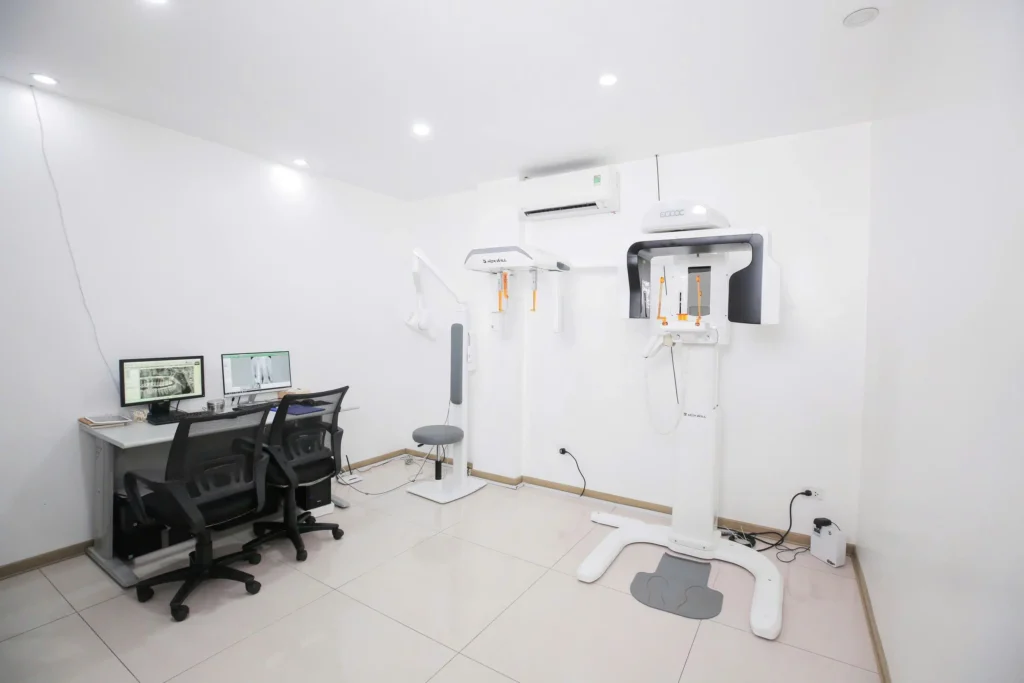
This is a critical imaging foundation before implant placement. It allows visualization of bone height, width, density, and important anatomical structures such as the inferior alveolar nerve and maxillary sinus. Without this step, implant placement becomes estimation; with it, planning becomes more precise.
2. Guide Line – surgical guide
This technology creates a guide based on diagnostic data and pre-calculated implant positioning. It helps the dentist place drills and implants closer to the planned position, reducing reliance on manual estimation and minimizing positional errors.
3. X-Guide navigation system
While Guide Line provides static guidance, X-Guide offers real-time dynamic navigation. It integrates Cone Beam CT data, planning software, and surgical navigation, allowing the dentist to visualize drill direction in 3D during surgery. This is especially valuable in complex anatomical cases.
4. Personalized implant solution DCT
This is one of the most important technological highlights at Lạc Việt Intech. DCT is not a single technique but a comprehensive personalized solution including surgical guides, customized healing abutments, customized prosthetic abutments, and multilayer full zirconia crowns. Its goal is to achieve safety, aesthetics, function, durability, and convenience.
5. Magnetic surgery technology
A minimally invasive technique that uses bone condensation rather than traditional drilling. It can increase bone density in certain indications, especially in softer bone areas or sinus lift procedures, but must be used with proper indications.
6. High-frequency ultrasonic surgery
This technology allows more precise bone cutting, reduces soft tissue trauma, minimizes swelling, pain, and bleeding, and enhances postoperative biological safety.
7. Plasma surface treatment
This technology cleans and activates implant surfaces before placement, enhancing biological interaction and supporting osseointegration in early stages.
8. Anycheck – implant stability measurement
This tool evaluates implant stability, helping determine the appropriate timing for prosthetic loading and avoiding premature or delayed restoration.
9. CAD/CAM, 3D printing, and digital workflow
These technologies improve the precision and consistency of prosthetic components, reducing manual errors and enhancing long-term outcomes.
Why are these technologies important for international patients?
International patients have a unique concern: they are not close to the clinic for multiple adjustments. Therefore, they need a treatment plan that is well-calculated from the beginning, minimizing errors and the need for retreatment after returning home.
In this context, technologies such as Cone Beam CT, Guide Line, X-Guide, DCT, CAD/CAM, Plasma, and Anycheck are not just branding tools, but directly impact the patient experience: fewer errors, fewer surprises, greater predictability, and better stability.
How should Lạc Việt Intech be positioned for international patients?
From a positioning perspective, Lạc Việt Intech should not be marketed as the “cheapest” or “fastest” option, but as a system focused on safety, sustainability, and reliability.
For international patients, a system considered a best dental clinic in Vietnam is not defined by low cost, but by professional competence, advanced technology, and long-term responsibility.
Conclusion: Is dental treatment safe in Vietnam?
The final answer is: yes, Vietnam can absolutely be a safe destination for dental treatment for international patients. However, that safety is not automatically present in every clinic.
If patients choose based on low prices, flashy marketing, or unrealistic promises, risks are real. But if they choose based on doctors, technology, materials, processes, and accountability, Vietnam can be both an effective and trustworthy treatment destination.
For well-invested systems like Lạc Việt Intech, the question is dental treatment safe in Vietnam should not be answered by perception, but by concrete evidence: specialized doctors, Cone Beam CT, Guide Line, X-Guide, DCT, magnetic surgery, ultrasonic surgery, Plasma, Anycheck, CAD/CAM, transparent processes, and a long-term safety-oriented approach.
FAQ: Is Dental Treatment Safe in Vietnam?
Is dental treatment in Vietnam safe for international patients?
Dental treatment in Vietnam can be safe for international patients when it is performed at a reputable clinic with experienced dentists, proper sterilization, clear treatment protocols, and transparent use of materials and technology.
What factors determine whether dental treatment in Vietnam is safe?
Key safety factors include the qualifications of the dentist, diagnostic technology such as CBCT and digital planning, infection-control standards, material authenticity, and whether the clinic provides a complete treatment plan instead of a simplified sales quote.
Are all dental clinics in Vietnam equally safe?
No. Safety standards can vary significantly between clinics. Patients should evaluate the clinical team, equipment, treatment philosophy, and aftercare rather than assuming all clinics offer the same level of safety.
What risks should patients check before choosing a clinic in Vietnam?
Patients should check for risks such as inadequate diagnosis, oversimplified treatment planning, unverified materials, poor sterilization protocols, and lack of long-term follow-up. These factors can affect both safety and treatment outcomes.
How can international patients reduce risk when seeking dental treatment in Vietnam?
They can reduce risk by choosing a clinic with experienced specialists, modern diagnostic and surgical technology, clear treatment documentation, transparent pricing, and a strong reputation for long-term responsibility after treatment.