
Numerous technologies for precise implant placement have been researched and developed; however. The two technologies currently in widespread application are static surgical guide technology (Guideline) and X-Guide dynamic 3D navigation technology. Within the scope of this article, we will explore the technology of implant placement using surgical guides (Guideline)
Dental implant placement is the optimal solution for restoring missing teeth. However, it is also a procedure that carries potential complications. The precise surgical drilling and three-dimensional placement of the implant fixture within the jawbone is of utmost importance. Numerous technologies for precise implant placement have been researched and developed. However, the two technologies currently in widespread application are surgical guide technology (Guideline) and X-Guide navigation technology. Within the scope of this article, we will explore the technology of implant placement using surgical guides (Guideline)
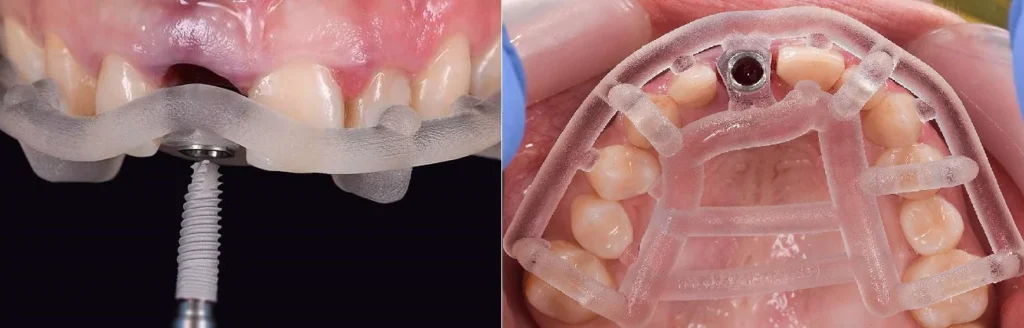
Why is the precise placement of the implant fixture into the jawbone so crucial in implant dentistry?
Before delving into surgical guides, let us understand why the precise placement of an implant fixture is critical. It must be emphasized that selecting a high-quality implant fixture is secondary in importance to its precise surgical placement. Even if the highest quality implant is selected, an inaccurate placement by the clinician will prevent the implant from functioning optimally, let alone the potential for iatrogenic complications or implant failure.
Precise placement of the fixture into the jawbone is extremely important for the following reasons:
First Reason: Precise placement prevents complications.
In the jawbone, there are anatomical structures. For the upper jaw, there is the maxillary sinus, for the lower jaw, there is the inferior alveolar nerve canal, which are all structures that cause danger if damaged. When placing an implant, the doctor must drill into the jawbone. If the drill bit goes inaccurately, it can damage these structures, thereby causing dangerous complications. On the other hand, inaccurate implant drilling can cause the implant root to deviate out of the bone, or drill into the roots of adjacent teeth, all of which leave sequelae.
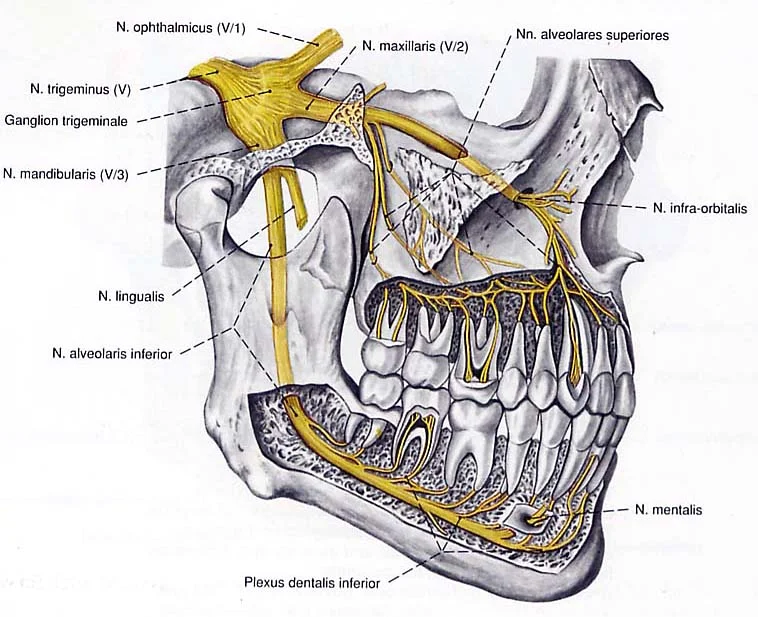
Second Reason: Precise placement ensures superior masticatory function, greater longevity, and enhanced aesthetics for the implant restoration
The natural position of our tooth roots has evolved based on the distribution of daily masticatory forces. Every natural tooth root has an axial inclination that coincides with the trajectory of masticatory forces. The longitudinal axis of the root aligns precisely with the point of maximum vertical force application. An implant fixture is considered accurately placed when its position and angulation perfectly align with the point of force application and the vector of force transmission. A properly positioned implant fixture ensures that occlusal forces are transmitted directly along its long axis. Thereby optimizing masticatory efficiency, minimizing marginal bone loss, and ensuring long-term stability.
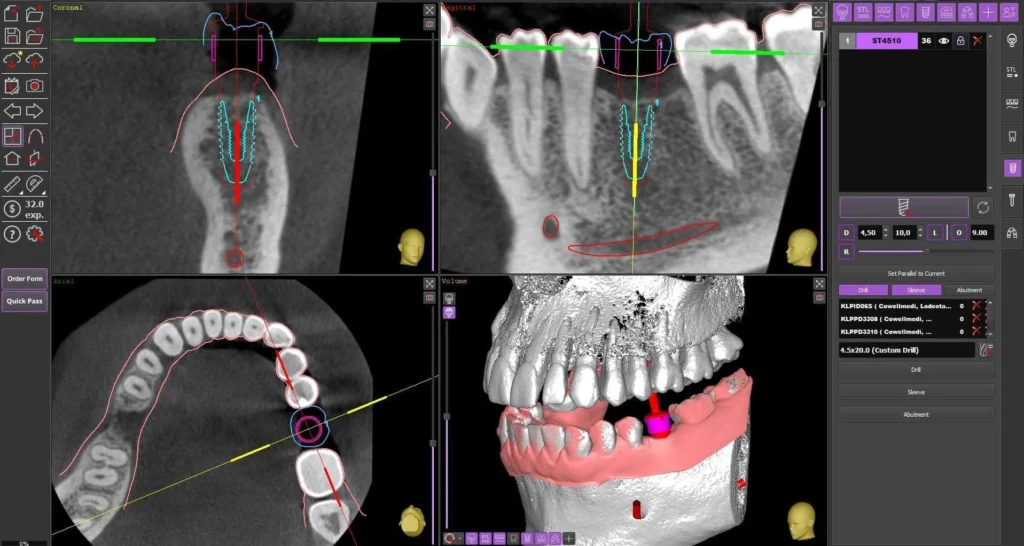
Moreover, in customized implant restorative solutions. The fixture must be placed at the precise apicocoronal depth to provide adequate transmucosal space for the customized abutment. Thereby facilitating the reconstruction of periodontal tissues and the re-establishment of the biologic width around the implant. If the implant is placed too shallowly (coronally), the customized abutment will fail to establish an effective biologic seal, leaving the implant more susceptible to pathogenic factors within the oral cavity.
The Precision Surgical Mechanism of Surgical Guides (Guideline)
Fundamentally, both static surgical guides and dynamic X-Guide navigation serve the purpose of transferring the software-based treatment plan to the patient’s oral cavity with maximum accuracy. The more advanced the technology, the smaller the margin of error between the virtual plan and the clinical reality.
Surgical guides ensure precision through a system of guiding sleeves (often referred to as ‘Clients’) and a specialized surgical drill kit. The guide sleeve (Client) functions to create a cylindrical pathway that directs the drill, ensuring it does not deviate from the planned trajectory and controlling the osteotomy depth so it is neither too shallow nor too deep.
Advantages of Implant Placement Using a Surgical Guide (Guideline)
First Advantage: Absolute safety.
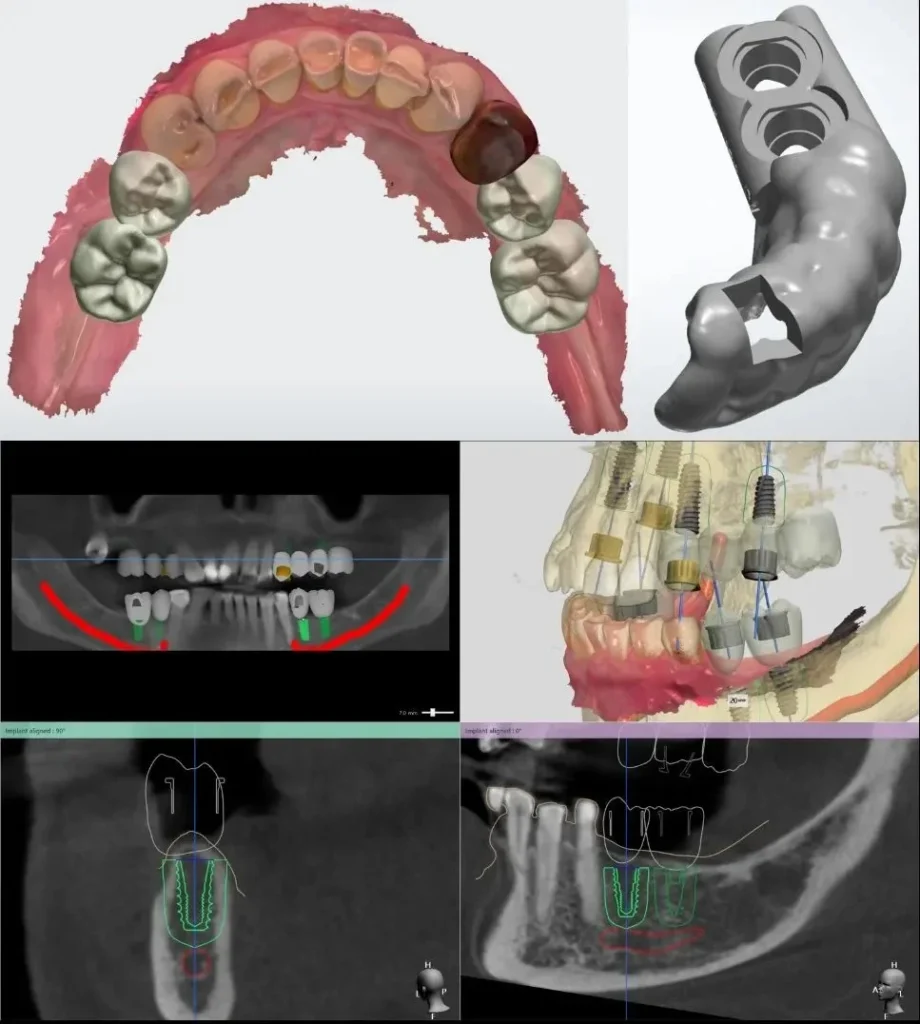
The surgical guide ensures that the drill does not deviate, over-penetrate, or under-penetrate during the osteotomy preparation, thereby preventing complications associated with misdirected drilling.
Ensures greater implant longevity, stability, and aesthetic outcomes
As previously analyzed, precise fixture placement at the optimal force-bearing location with an angulation parallel to the force vector enhances masticatory function, reduces marginal bone loss, and increases stability. Placing the implant at the correct apicocoronal depth, combined with patient-specific restorative solutions, facilitates periodontal tissue regeneration and biologic seal establishment, resulting in a more durable and aesthetically pleasing implant.
The surgical process takes place faster, gentler, and with less pain.
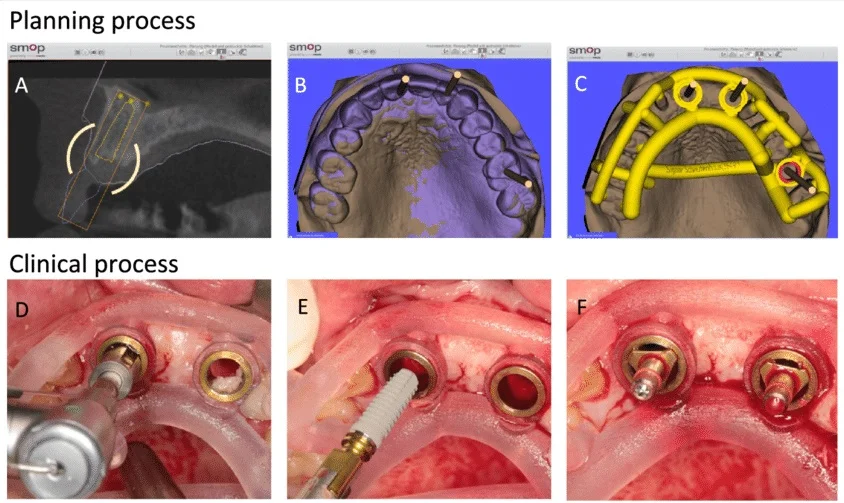
Because the implant placement position has been positioned on the guide, when using Guideline. The doctor will not need to flip the gum flap too widely, and the drilling process does not need to be aimed and adjusted, so the surgery will take place faster, gentler, with less swelling, pain, and bleeding compared to the root placement method based on experience and hand feeling (freehand). In cases where the keratinized gum tissue is wide enough, the doctor may not need to flip the gum flap when using the guideline; however, it must be emphasized that this is only applied when the gum tissue is truly wide enough, otherwise it will lead to a lack of keratinized gum, which is the agent causing peri-implantitis after 3 – 5 years of use.
However, this technique also presents disadvantages: patients will require an additional clinical appointment compared to traditional implant protocols, and the overall cost is higher. Additionally, in cases of limited mouth opening (trismus), performing surgery with a guide may present technical difficulties. For customized implant restorative solutions, the use of a surgical guide is mandatory. Implant placement using a surgical guide involves a significantly less invasive surgical approach.
>>> See also: Dental implants using the DCT solution
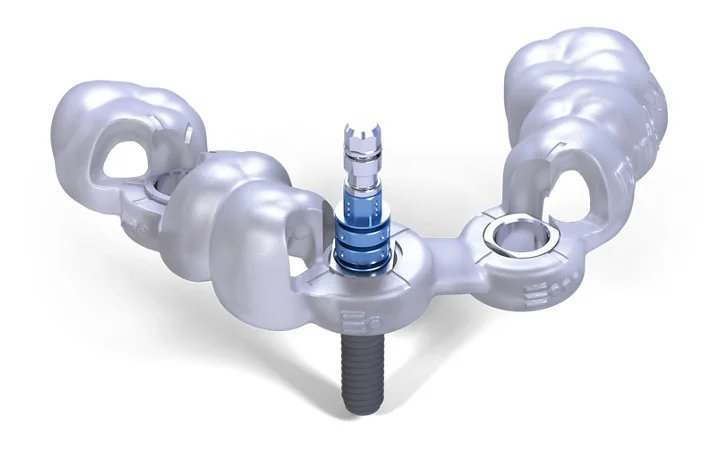
Components of a Surgical Guide
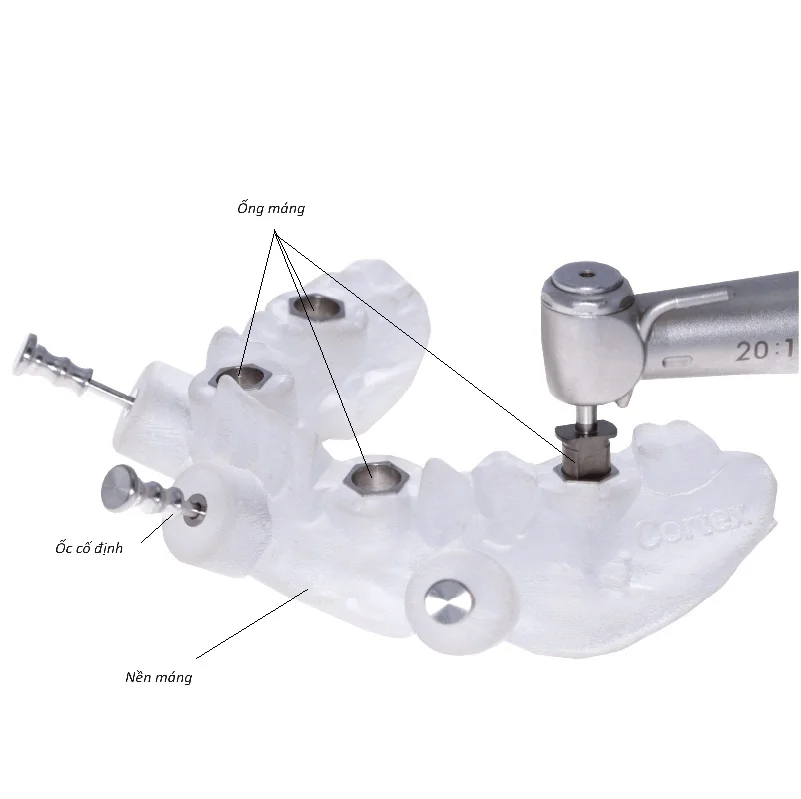
Surgical guides can be fabricated from medical-grade resin or metal via 3D printing and consist of three main components:
The Guide Base
This is the portion that rests on the adjacent teeth or the edentulous ridge, ensuring the guide is accurately seated and stabilized on the dental arch.
The Guide Sleeve (Client):
This component creates a “tunnel” that aligns the surgical drill throughout the osteotomy preparation, ensuring the drill does not deviate from the pre-calculated trajectory. The sleeve (Client) can be 3D-printed in titanium or milled via CAD/CAM technology; it represents the most critical component of the surgical guide.
The Fixation Pin System:
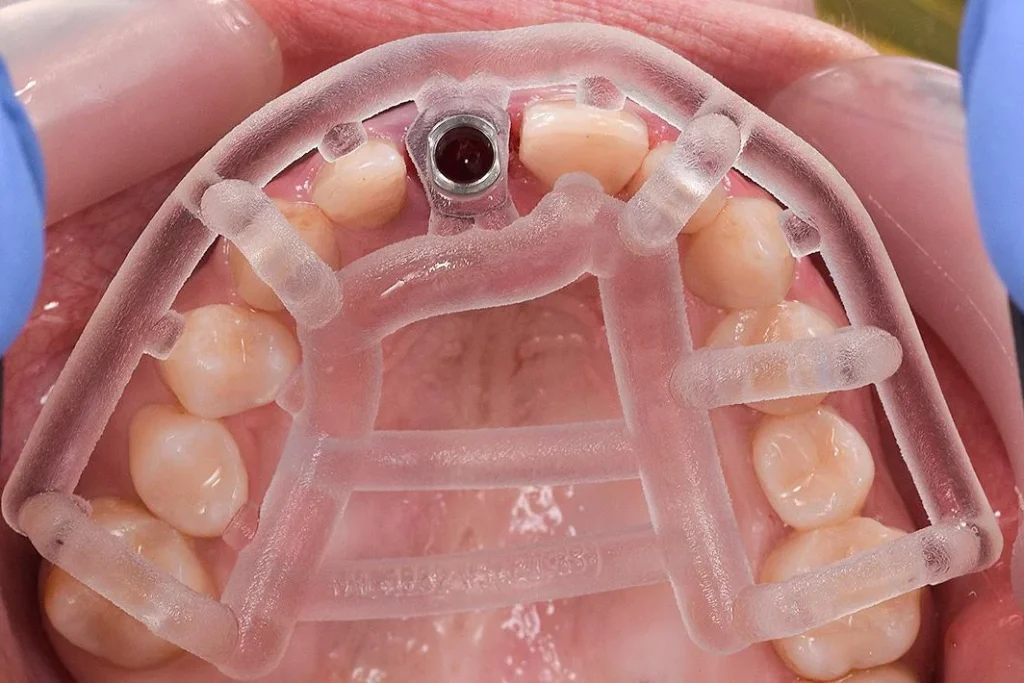
This system functions to rigidly secure the guide to the alveolar ridge; fixation pins are exclusively utilized in fully edentulous cases or extended partial edentulism where there is insufficient natural dentition to provide adequate support and stability for the guide.
The Surgical Protocol for Guided Implant Surgery
Guided surgery involves six steps, among which the virtual treatment planning and precise guide fabrication are the most critical.
Step 1: Collection of clinical and pre-clinical data.
To perform guided surgery. It is mandatory to acquire a Cone Beam Computed Tomography (CBCT) scan and an intraoral optical scan of the dental arch. Conventional analog impressions cannot yield an accurate surgical guide, which poses a significant clinical risk.
Step 2: Ideal virtual implant planning.
The acquired data is digitized and imported into specialized implant planning software, where the clinician performs the virtual treatment simulation. The ideal 3D implant position is established. Unlike freehand planning—which often follows a ‘bone-driven’ approach where implants are placed wherever bone is available—guided planning is ‘prosthetically-driven,’ based on the final restoration. The patient’s occlusion, and the masticatory muscular system.
The clinician must answer the question: how should the future prosthetic crown be designed to ensure ideal occlusion and masticatory efficiency?. Subsequently, the clinician designs a customized abutment with a morphology and emergence profile suitable for ideal periodontal tissues, and finally determines the implant fixture position that perfectly aligns with the occlusal force vector of the prosthetic crown, at the optimal depth allowing the custom abutment to re-establish the biologic width. In summary: the virtual planning process for guided surgery is the reverse of conventional implant planning based on tactile experience. The former uses a ‘top-down’ prosthetically-driven approach (from the crown down). Whereas the latter utilizes a ‘bottom-up’ bone-driven approach (from the implant up).
Step 3: Surgical guide design.
Upon finalizing the ideal implant position, the clinician designs the surgical guide, determining the configuration of the guide base. (Determining) its tissue or tooth support surfaces, and evaluating the necessity for fixation pins. The selection of the specific manufacturer’s surgical kit dictates the precise dimensions of the guide sleeves (Clients) to ensure a perfect fit.
Step 4: Fabrication of the surgical guide
Once designed, the guide is fabricated utilizing 3D printing technology; for minor edentulous spans, medical-grade surgical resin is sufficient. For extensive edentulism or full-arch cases, the guide must incorporate a 3D-printed metal framework for adequate rigidity. The coronal superstructure may be fabricated from resin. But the guide sleeves (Clients) must strictly be titanium (this is known as a stacked or multi-component surgical guide).
Step 5: Sterilization of the surgical guide
Following fabrication, the guide must undergo autoclave sterilization and sterile packaging prior to clinical use.
Step 6: Guided implant surgery.
This phase comprises five sub-steps:
- Incision to expose the alveolar ridge. In guided surgery, flap elevation is minimized, requiring only enough exposure to allow access for the surgical drills.
- Securing the surgical guide to the dental arch.
- Osteotomy preparation.
- Implant placement.
- Guide removal and placement of the customized healing abutment: in customized restorative solutions. The customized healing abutment is fabricated simultaneously with the surgical guide and is placed immediately post-surgery.
At Lac Viet Intech, 100% of our patients receive customized implant restorative solutions. The total turnaround time from patient consent to the completion of implant placement surgery is 3 days, requiring 2 appointments.
>>> See also: Best dental implant clinics in Vietnam
Differentiating Precision Surgical Guides (Guideline) from Conventional Positioning Guides
Currently, there are two types of guides utilized in the market. Differing significantly in their level of precision and cost: precision surgical guides (Guideline) and conventional positioning guides.
Conventional positioning guides are fabricated manually from resin, are very low in cost, and lack high precision. The distinguishing feature between the two is that positioning guides do not possess surgical guide sleeves (Clients)—meaning they lack the dark metal cylinders embedded within the guide body—and patients should be aware of this distinction to accurately identify the two types, as they differ vastly in quality and cost.
FAQ
A surgical guide is a custom-made device used during implant surgery to direct the drill and ensure the implant is placed in the exact planned position, angle, and depth.
Accurate implant placement helps avoid complications such as nerve damage or sinus perforation, while also improving chewing function, aesthetics, and long-term implant stability.
Guided implant surgery is a technique that uses digital planning and a surgical guide to place implants with high precision instead of relying on freehand placement.
The surgical guide contains guide sleeves that control the direction and depth of the drill, preventing deviation from the planned implant position.
Guided implant surgery uses digital planning and a guide to ensure accuracy, while freehand implant placement depends on the dentist’s experience and manual estimation.
Yes. Guided implant surgery significantly reduces the risk of complications by ensuring precise positioning and avoiding critical anatomical structures.
A precision surgical guide includes guide sleeves for accurate drilling, while a positioning guide is manually made, less precise, and does not control drilling direction or depth.
Guided implant surgery requires CBCT scanning, intraoral scanning, implant planning software, and 3D printing technology to design and fabricate the surgical guide.
Related reading for international patients
If you are comparing treatment options, you may also find these guides helpful: Advanced Dental Implant Technologies at Lạc Việt Intech, 5 Important Criteria to Ensure Safe and Sustainable Dental Implant Placement and Dental Implant Vietnam: The Complete Guide for International Patients Seeking Safe and Long-Lasting Treatment.