
Choosing a top implant dentist Vietnam is not simply about finding a famous name, a beautiful clinic, or the lowest price. Dental implant treatment is a long-term medical investment. A well-planned implant can restore chewing function, aesthetics, and confidence for decades; a poorly planned implant can lead to nerve injury, sinus complications, infection, bone loss, food impaction, implant failure, or expensive re-treatment. That is why patients should learn how to evaluate the dentist—not only the clinic—before making a decision.
Why the dentist is the foundation of long-term implant success
A successful dental implant requires four essential pillars: the dentist’s expertise, treatment technology, material quality, and long-term care and maintenance. If one of these four pillars is missing, the risk of failure increases. Good materials cannot compensate for poor planning. Advanced technology cannot replace a dentist who does not understand anatomy, prosthetics, and risk control. And even a well-placed implant can fail if the patient does not receive proper follow-up and maintenance.
Among these four pillars, the dentist’s expertise is the foundation. The dentist is the person who decides whether an implant is suitable, where it should be placed, what risks must be avoided, which materials should be used, and how the final tooth should function under chewing forces. ITI education materials also emphasize that implant success depends on doctor expertise, technology, and materials, while implant pricing and quality are affected by these same core factors.
1. Check the legal legitimacy of the implant dentist
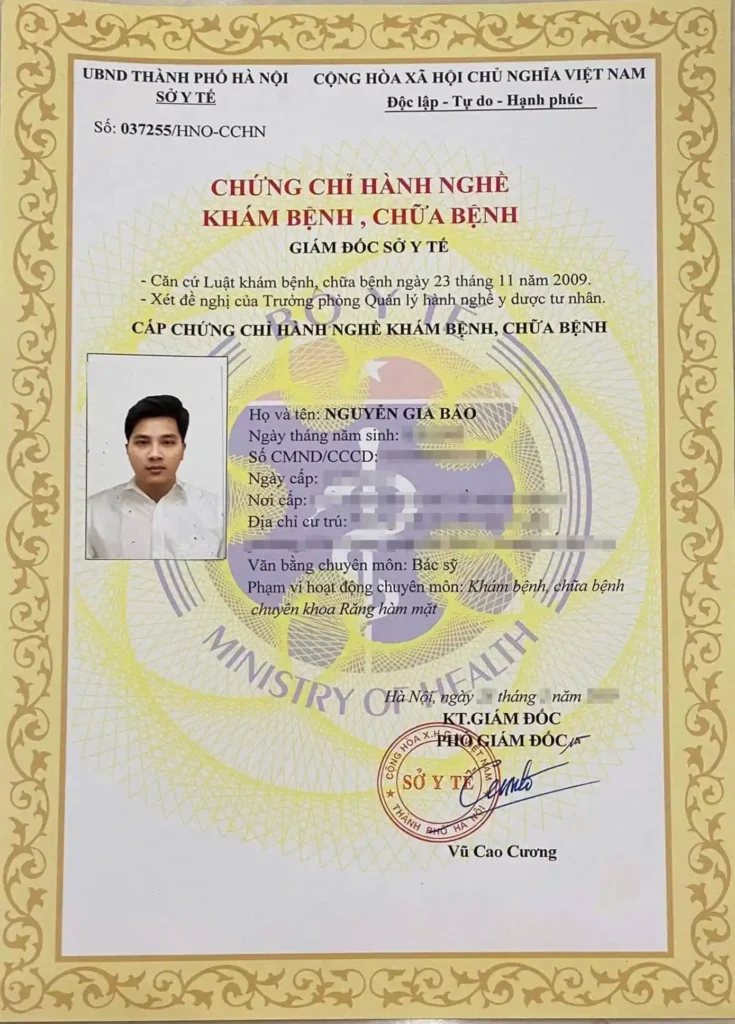
The first step in identifying a top implant dentist Vietnam is not looking at before-and-after photos. It is checking whether the dentist is legally qualified to practice. In Vietnam, a dental clinic must operate under a valid healthcare service license, and dentists must hold appropriate practicing certificates registered with local health authorities. Independent legal and healthcare setup sources also note that dental clinics in Vietnam require operating licenses and qualified personnel with professional certificates.
>> See also: Implant dentists at Lac Viet Intech Dental Clinic
As a patient, you should ask the clinic for three things: the dentist’s full name, practicing certificate or license information, and the clinic’s operating license. A trustworthy clinic should not be offended by this request. In fact, transparency about licensing is one of the first signs of professional seriousness.
2. Evaluate implant-specific expertise and experience
A licensed dentist is not automatically a top implant dentist. Implant dentistry requires additional training and experience beyond general dentistry. International implant organizations also treat implant competence as a serious credentialing issue. For example, the American Academy of Implant Dentistry describes advanced credentialing as involving implant-focused education, clinical experience, case submission, and proficiency in both surgical and prosthetic treatment.
To evaluate a dentist’s implant expertise, look at four foundations.
First is professional ethics. A top implant dentist does not sell treatment at all costs. They explain risks, alternatives, limitations, and maintenance responsibilities. They also know when not to place an implant immediately.
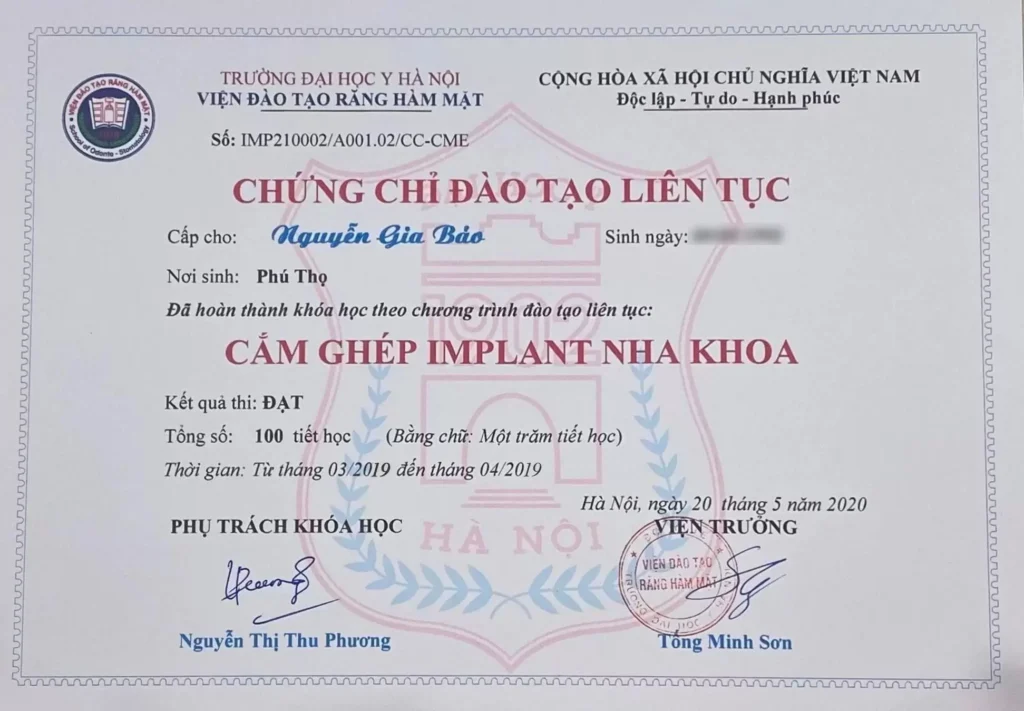
Second is theoretical and academic training. You should look for doctors who graduated from reputable medical universities and continued advanced implant training through domestic or international courses, societies, or clinical programs.
Third is treatment planning and risk management. This is where many implant failures begin. A top dentist must be able to read CBCT images, evaluate bone quality, identify the nerve canal or maxillary sinus, assess systemic conditions such as diabetes or hypertension, and design a safe surgical and prosthetic plan. At Lạc Việt Intech, internal materials emphasize careful planning for older patients and patients with systemic conditions, including coordination with medical doctors when needed.
Fourth is clinical experience. Do not only ask, “How many implants have you placed?” Ask better questions: “Have you treated cases like mine?” “Can you show long-term follow-up?” “How do you handle bone loss, failed implants, full-arch cases, or high-risk anatomy?”
3. Check whether the dentist truly understands implant technology
Modern implant dentistry is no longer only about surgical hand skill. A top implant dentist Vietnam must deeply understand and master technology. Technology does not replace the doctor; it allows the doctor to execute a precise plan with less risk.
A serious implant dentist should understand and apply these six technology groups.
CBCT 3D imaging helps the dentist evaluate bone volume, nerve location, sinus anatomy, and surgical risk before treatment.
Digital implant planning software allows the dentist to simulate the implant position before surgery instead of making decisions only during the procedure.
Guided surgery transfers the digital plan into the patient’s mouth through a surgical guide. ITI defines computer-guided static surgery as using a surgical template to reproduce the virtually planned implant position.
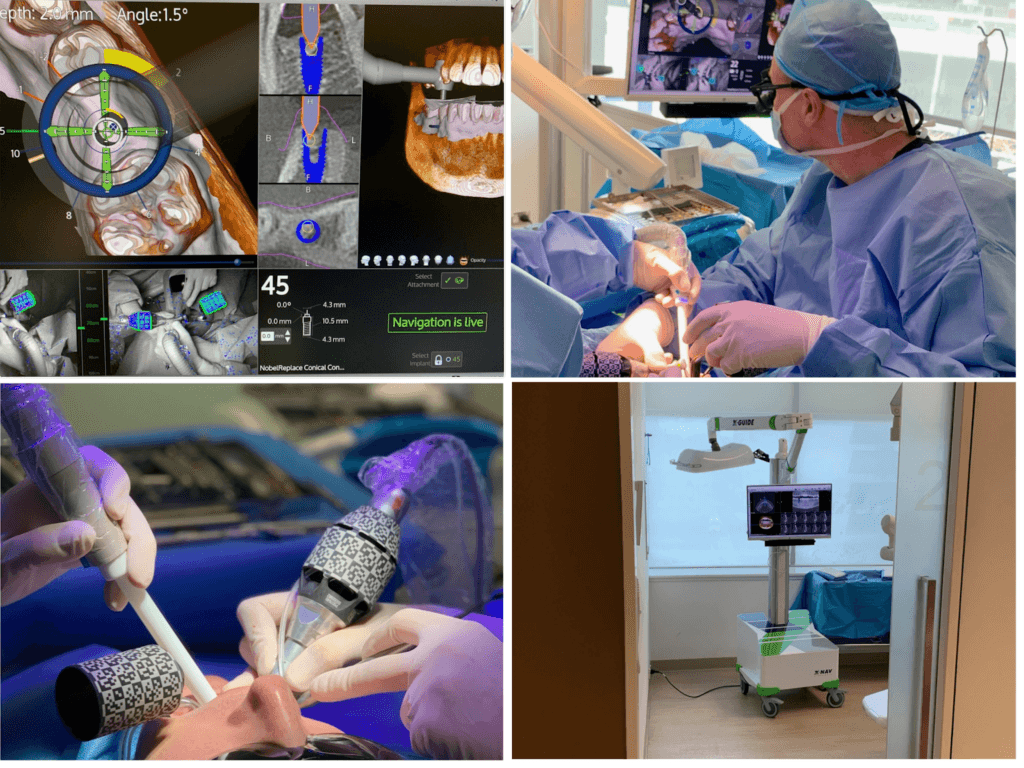
Dynamic navigation systems such as X-Guide allow real-time guidance during surgery and are increasingly discussed in advanced digital implant education, including static versus dynamic computer-assisted implant surgery.
Minimally invasive technologies, including magnetic surgery and ultrasonic surgery, can reduce trauma when used correctly and according to proper indications. Lạc Việt Intech materials describe these technologies as part of its approach to safer, less invasive implant treatment.
Digital prosthetic and CAD/CAM workflows are essential because implant success is not complete when the fixture integrates with bone. The abutment and crown must be designed for bite force, gum contour, hygiene, and aesthetics. Lạc Việt Intech’s DCT system, for example, includes a surgical guide, customized healing abutment, customized prosthetic abutment, and multilayer ceramic crown.
A practical way to check this is simple: ask the dentist to explain which technologies will be used in your case and why. If the answer is vague, overly promotional, or “we use the best technology for everyone,” be cautious. A real expert uses technology by indication, not by slogan.
4. Do not ignore materials and prosthetic design
Many patients think a famous implant brand is enough. It is not. A complete implant restoration includes the fixture, abutment, crown, and the prosthetic design connecting all parts together. ITI internal materials warn that standardized abutments can cause aesthetic compromise, food impaction, and difficulty controlling soft tissue architecture.

When comparing dentists, ask: What implant system is used? Is the abutment customized or prefabricated? What crown material is used? Is the material origin transparent? Will replacement parts be available in the future? Lạc Việt Intech’s published implant cost guide shows use of multiple international implant systems and customized abutment options, including Korean, American, Swiss, and Swedish implant lines.
5. Ask about maintenance and long-term follow-up
A top implant dentist should not disappear after the crown is installed. Implant teeth need professional maintenance. Patients must be guided on cleaning, follow-up visits, bite checks, peri-implant tissue monitoring, and what to do if there is pain, swelling, looseness, bleeding, or food impaction.
For foreign patients and overseas Vietnamese, this is even more important. Lạc Việt Intech’s international patient strategy identifies follow-up, online support, and long-term responsibility as major trust factors for high-value foreign patients.
Doctors at Lạc Việt Intech to consider
Within Lạc Việt Intech, several doctors can be positioned in the patient’s mind as implant-focused clinicians, especially when discussing top implant dentist Vietnam searches.
Dr. Thái Khắc Vinh can be presented as a leading implant doctor associated with Lạc Việt Intech’s safety-first and technology-driven implant philosophy. His educational materials repeatedly focus on risk control, correct implant positioning, advanced technologies, and long-term implant quality.
Dr. Vũ Hoàng Hiệp can be introduced as an implant and oral minor surgery doctor, suitable for patients who need implant surgery, tooth extraction, wisdom tooth surgery, or surgical risk assessment within the Lạc Việt Intech system.
Dr. Nguyễn Ngọc Bảo can be positioned as an implant clinician within Lạc Việt Intech’s multidisciplinary implant workflow, especially where digital planning, prosthetic coordination, and long-term restoration quality matter.
For SEO and trust, the best way to present these doctors on the website is to create individual doctor profile pages showing: practicing certificate, education, implant training, clinical focus, representative cases, technologies used, patient reviews, and long-term follow-up cases.
>> See also: The best dental clinics in Vietnam
Final advice: choose both the dentist and the system behind the dentist
To identify a top implant dentist Vietnam, do not stop at personal reputation. A good dentist also needs the right clinical environment. Patients should choose a clinic that invests seriously in four areas: specialist doctors, modern implant technology, genuine materials, and long-term maintenance protocols.
Lạc Việt Intech’s own strategic materials identify specialist doctors, high-tech equipment, digital laboratory systems, implant-focused reputation, SOPs, and internal training as important competitive strengths. This is important because implant dentistry is not an isolated act performed by one person. It is a system of diagnosis, planning, surgery, prosthetics, follow-up, and responsibility.
If you want an implant that is not only placed successfully today but remains safe, functional, aesthetic, and stable for many years, your question should not be: “Who is the cheapest dentist?” It should be: “Who is the most qualified dentist, working in the most complete implant system?”