
An expert perspective for patients researching safe dental implant treatment in Vietnam.
When international patients search for the keyword safe dental implant Vietnam, behind that query is often a very real concern: are dental implants in Vietnam safe, reliable, durable, and if something goes wrong, who will be responsible? This is a valid, necessary question and should be asked before undergoing treatment. However, to answer it accurately, the issue must be viewed from a medical perspective rather than purely a geographical one. The safety of dental implant treatment is not determined simply by whether you have it done in Vietnam, the United States, Australia, South Korea, or Europe; it is determined by whether you choose the right dental clinic, the right doctor, the right treatment plan, the right technology, and the right materials. In other words, implant risks are medical in nature and can occur in any country if patients are treated at facilities that lack specialization, transparency, or proper risk control. Conversely, when performed according to proper standards, with a well-structured system of diagnosis, surgery, and prosthetics, safe dental implant Vietnam can absolutely be a good option for international patients thanks to the combination of clinical expertise, modern technology, and reasonable cost. This pillar guide explains four core areas: the real risks and complications of dental implants, the factors that determine safety, how to choose a safe implant clinic in Vietnam, and why many international patients consider Lac Viet Intech for treatment.

Potential Risks and Complications of Dental Implant Treatment
First, it is essential to emphasize a very important point: implant complications are not a “Vietnam-specific issue.” They can occur anywhere in the world if patients choose the wrong provider, if the treatment plan is inadequate, if supporting technology is insufficient, or if materials and prosthetics are not well controlled. This is why a patient may undergo treatment in a highly developed country yet still experience failure if they choose the wrong provider, and conversely, achieve safe and long-lasting results in Vietnam when treated at a truly specialized center.
From a professional perspective, implant complications can be divided into three main groups: intraoperative complications, early postoperative complications, and long-term complications after use.
1.1. Intraoperative complications
This group includes complications that occur during implant placement or are directly related to the surgical procedure. The most serious complication is incorrect implant positioning, angulation, or depth, which may damage important anatomical structures. In the lower jaw, if the implant is placed too deep or deviates from the plan, it may injure the inferior alveolar nerve, causing numbness of the lips, chin, reduced sensation, burning pain, or prolonged paresthesia. In the upper jaw, incorrect angulation may invade the maxillary sinus, increasing the risk of sinusitis, facial discomfort, or creating significant challenges for future prosthetic restoration. Additionally, in cases of thin bone or severe bone loss, if surgery is not precisely controlled, complications such as cortical plate perforation, bone fracture, reduced primary stability, or even loss of necessary bone foundation for implant support may occur.
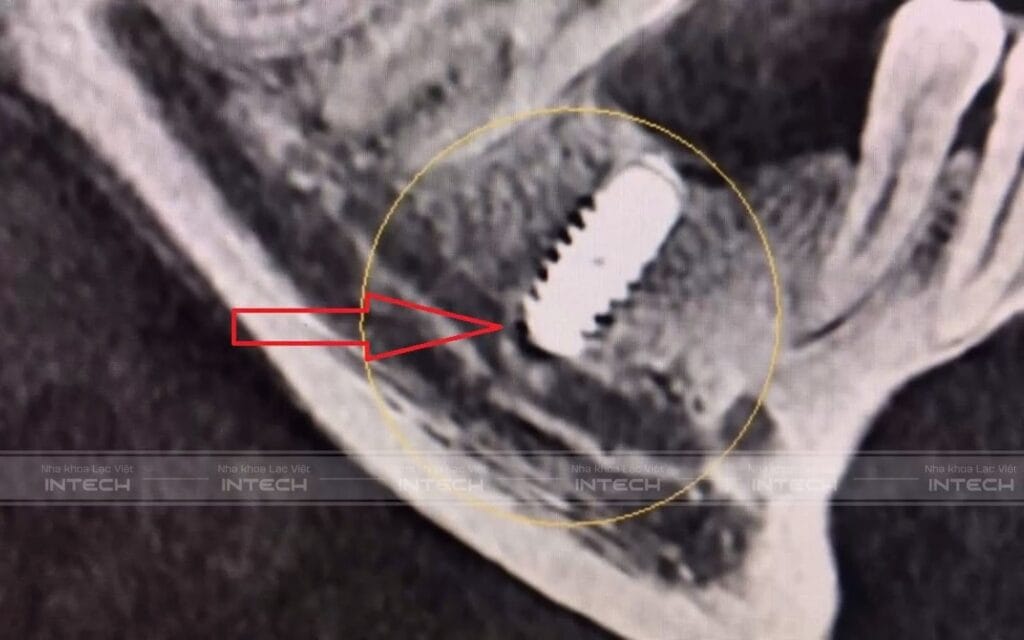
Another possible complication is bleeding during or shortly after surgery. While most cases can be controlled, in patients with coagulation disorders, those taking anticoagulants, or in anatomically complex surgical areas, this risk must not be underestimated. Furthermore, if sterilization protocols are not strictly followed or if soft tissue handling is overly traumatic, patients may experience greater swelling and pain, delayed healing, and increased risk of infection.
1.2. Early postoperative complications
After implant placement, the implant must undergo osseointegration. This is a critical phase but also a period when many issues can arise if treatment is not properly controlled. The most common complication is failure of osseointegration or unstable integration, meaning the implant is placed in the bone but does not achieve sufficient biological bonding to withstand long-term functional load. Causes may include poor bone quality, improper surgical technique, inappropriate insertion torque, early micromovement, infection, premature loading, or systemic risk factors such as heavy smoking, poorly controlled diabetes, immune suppression, or poor oral hygiene.
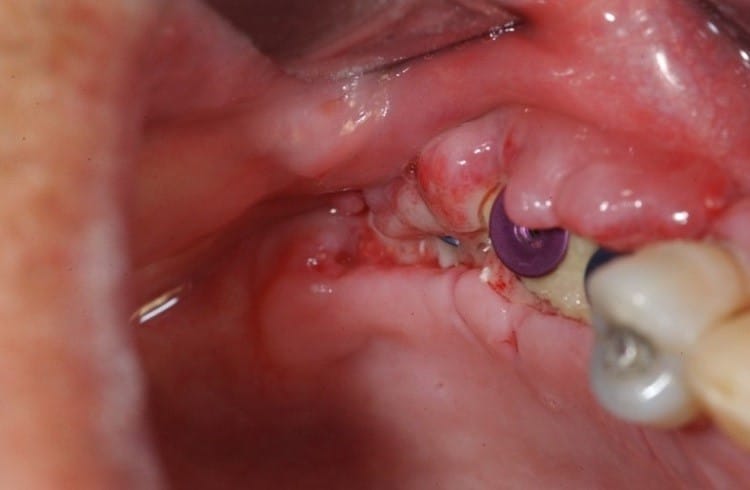
In addition to early osseointegration failure, patients may experience prolonged swelling and pain, infection at the surgical site, suture dehiscence, delayed healing, peri-implant soft tissue inflammation, or persistent discomfort if soft tissues are not properly managed. In cases involving bone grafting or sinus lifting, procedure-specific complications may also occur, such as graft resorption, sinus membrane perforation, infection of the graft site, or suboptimal healing outcomes.
1.3. Long-term complications after use
This group of complications is particularly important because many patients believe that once the implant has integrated with bone, the treatment is successful. In reality, this is not the case. A successful implant is not only one that remains in the bone but must also be biologically stable, mechanically durable, aesthetically pleasing, functionally efficient for chewing, and easy to maintain hygiene. After months or years of use, if the treatment plan or prosthetic design is inadequate, patients may encounter various late complications such as peri-implantitis, bone loss around the implant, loosening of prosthetic screws, screw fracture, chipping or fracture of ceramic crowns, food impaction, gingival recession, exposure of the implant neck, occlusal discrepancies, or unstable chewing function.

Among these, peri-implantitis is particularly concerning because it can progress silently, starting with soft tissue inflammation around the implant, bleeding during brushing, bad breath, food impaction, and eventually progressing to bone loss if not detected and treated promptly. Other cases may involve more mechanical complications rather than inflammation, such as improper load distribution, incorrect implant angulation, suboptimal abutment design, or inappropriate prosthetic design, leading to uneven force distribution and long-term mechanical failure. This is why the question of safe dental implant treatment in Vietnam cannot be answered solely by asking whether “the surgery is safe,” but must be evaluated across the entire lifecycle of the implant.
What Determines the Safety of Dental Implant Treatment?
From an expert perspective, the safety of an implant case does not come from luck or attractive marketing claims, but from a series of tightly controlled factors from beginning to end. Below are the core factors that determine whether an implant case is truly safe.
2.1. Accurate diagnosis and proper treatment planning
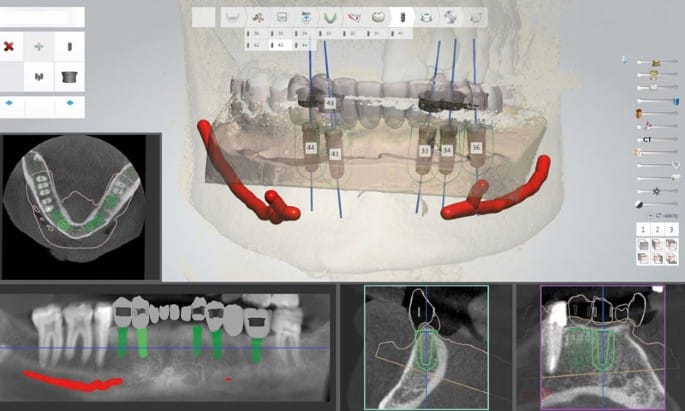
This is the most critical factor. A good implant plan does not simply state “how many implants to place,” but must answer a series of essential questions: what is the current bone condition, what is the bone density, is bone grafting or sinus lifting required, which implant positions will be both safe and favorable for prosthetics, how will occlusal forces be distributed, which prosthetic solution is appropriate, and what contingency plans exist if risks arise. In implant dentistry, a good plan is one that anticipates and controls risks, not one that only highlights advantages while ignoring complications.
2.2. Doctor’s expertise and experience
Implant dentistry is not a procedure where “being able to do it is enough.” The treating doctor must have deep knowledge of jaw anatomy, periodontal tissues, occlusion, osseointegration biology, bone grafting techniques, prosthetic design, and complication management. An inexperienced doctor may still be able to place an implant, but achieving correct positioning, angulation, depth, indication, and optimal prosthetic outcomes requires a much higher level of expertise. For international patients, getting it right from the beginning is critical because they cannot travel repeatedly for corrections.
2.3. Precision-supporting technology
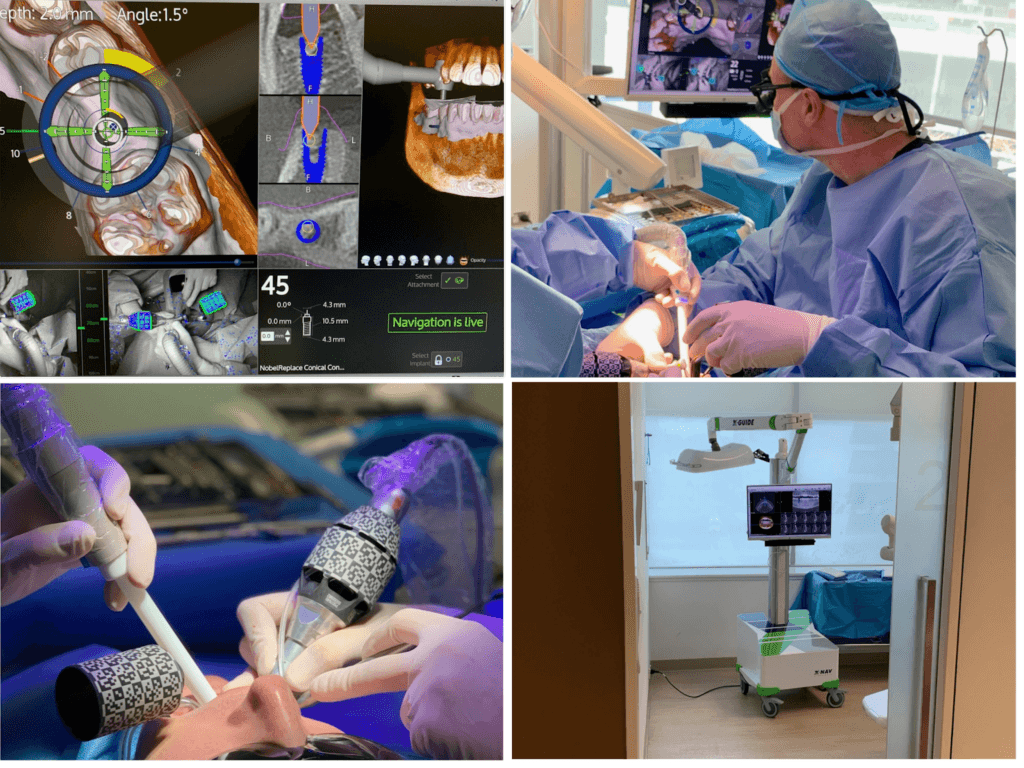
In modern implant dentistry, technology plays a significant role in enhancing safety. 3D CBCT imaging allows accurate evaluation of bone, nerves, sinuses, and bone density; digital scanning systems enable analysis of occlusion and soft tissue and support prosthetic design; surgical guides or X-Guide navigation systems significantly improve placement accuracy compared to manual techniques. Technology also includes minimally invasive methods and healing-enhancement techniques such as magnetic surgery, piezoelectric surgery, plasma surface activation of implants, and devices like Anycheck to quantify osseointegration before prosthetic loading. A true safe dental implant Vietnam case must be supported by a technological system that reduces error and improves predictability. Patients who want to understand this in more detail can review the implant technologies used at Lac Viet Intech.
2.4. Material quality
Many patients only ask about “which implant brand is used,” but this is only part of the system. An implant system includes the implant fixture, abutment, and the prosthetic crown. If the implant is good but the abutment is suboptimal, or the crown is inappropriate, complications such as food impaction, gum inflammation, overload, or mechanical failure may still occur. Therefore, material quality must be understood as the quality of the entire prosthetic system, and all components must be genuine, clearly sourced, and appropriate for each specific case.
2.5. Post-treatment care and long-term follow-up
Implant treatment is a long-term process, not a one-time service. A safe case must include clear care instructions, follow-up visits, occlusal evaluation, monitoring of peri-implant tissues, and early management of minor issues. Especially for international patients, the treatment center must have a clear system of follow-up support and responsibility after the patient returns home.
How to Choose a Safe Dental Implant Clinic in Vietnam
If you are looking for a safe dental implant Vietnam provider, the following considerations are critical and should not be overlooked.
3.1. Verify the legal status of the clinic and doctor
This is a basic but extremely important step. You must ensure the clinic operates legally, has appropriate licensing, and that the treating doctor holds a valid professional license and can provide transparent professional credentials. A safe implant case must begin with a clear legal foundation.
3.2. Identify who will directly treat you
Do not rely solely on general brand reputation. Ask clearly which doctor will perform the surgery, whether they specialize in implantology, their years of experience, and whether they have handled complex cases such as severe bone loss, sinus lifting, bone grafting, multiple implants, or full-arch restorations. In implant dentistry, the individual practitioner matters more than any marketing slogan.
3.3. Request a clear, personalized treatment plan
A trustworthy clinic will not provide a superficial diagnosis followed by an immediate quotation. If you are comparing providers, this guide on choosing the best dental implant clinic in Vietnam is also useful. They must perform imaging, analyze bone structure, clearly explain the number of implants, placement positions, case risks, contingency plans, and final prosthetic design. The more transparent the plan, the more reliable the treatment.
3.4. Evaluate the technology used
Ask whether the clinic has 3D CBCT imaging, digital scanning, surgical guides or navigation systems, minimally invasive techniques, and osseointegration assessment tools. A center that invests in technology demonstrates a commitment to precision and safety.
3.5. Review the entire material system, not just the implant brand
You should know not only the implant brand but also the type of abutment, type of crown, whether customized abutments are used, whether multilayer zirconia is used, and whether all materials are genuine and clearly sourced. A good clinic will be willing to explain and demonstrate this.
3.6. Carefully review pricing, warranty, and post-treatment responsibility
For international patients, unexpected costs and post-treatment responsibility are major concerns. It also helps to review the updated dental implant cost in Vietnam so pricing can be evaluated together with treatment scope and warranty. You should choose a provider with transparent pricing, clear explanation of included items, potential additional costs, and especially clear warranty, maintenance, and complication management policies.
Why International Patients Choose Lac Viet Intech for Implant Treatment in Vietnam
When international patients research safe dental implant Vietnam, what they need is not just a place that can “place implants,” but a place that minimizes risk from diagnosis to long-term function. This is why Lạc Việt Intech is considered by many patients traveling to Vietnam for implant treatment.
First is the team of implant specialists who focus not only on successful implant placement but on achieving final outcomes that are safe, durable, aesthetic, and functionally effective. This is particularly important for long-distance patients who need a “right from the beginning” plan rather than one requiring multiple corrections.
Second is the advanced treatment technology system. Lac Viet Intech Dental Center utilizes CBCT imaging, digital scanning, surgical guides, and in complex cases, X-Guide navigation to improve accuracy. Additionally, technologies such as magnetic surgery, piezoelectric surgery, plasma activation, Anycheck, and advanced scanning systems enhance safety, reduce invasiveness, and improve treatment control.
>>> See more: Advanced Dental Implant Technologies at Lạc Việt Intech
Third is a comprehensive approach to materials. At Lạc Việt Intech, materials are not limited to the implant fixture but include abutments, connection systems, and prosthetic crowns. The use of customized abutments, multilayer zirconia crowns, and genuine, clearly sourced materials enhances both biological and mechanical stability.
Fourth is transparency in pricing and treatment planning. For international patients, this transparency helps them understand exactly what they are receiving, what materials are used, the responsibilities of both parties, and helps avoid unexpected costs.
Finally, long-term warranty and responsibility policies. This is one of the key reasons why many overseas patients value Lạc Việt Intech. Implant treatment is only truly valuable when the provider remains responsible not only during treatment but also when issues arise later.

Conclusion: Are Dental Implants Safe in Vietnam?
The correct answer to the question “Are Dental Implants Safe in Vietnam?” is: they can be very safe, if you choose the right dental provider. Vietnam has made significant advancements in implant dentistry, but like any country, safety levels vary between providers. A safe dental implant Vietnam case is not created by advertising, but by skilled doctors, proper treatment planning, precise technology, high-quality materials, transparent pricing, and clear post-treatment responsibility. That is also why many international patients choose Lạc Việt Intech when coming to Vietnam for implant treatment: not because of simple promises, but because of a treatment system built to ensure real safety, real durability, and long-term accountability.
Frequently Asked Questions (FAQ)
Are dental implants safe in Vietnam?
Yes. Dental implants can be very safe in Vietnam when treatment is performed at a properly licensed clinic with an experienced implant team, accurate diagnosis, modern surgical technology, and a clear long-term treatment plan.
What are the main risks of dental implant treatment?
The main risks include nerve injury, sinus perforation, bleeding, post-operative infection, failure of osseointegration, peri-implantitis, and mechanical complications related to the prosthetic restoration.
How do I choose a safe dental implant clinic in Vietnam?
You should verify the clinic’s legal status, review the doctor’s implant experience, ask for a clear personalized treatment plan, evaluate the technology used, and confirm material quality, warranty, and follow-up responsibility.
What factors affect implant success?
Implant success depends on correct diagnosis, bone condition, doctor expertise, surgical precision, material quality, prosthetic planning, and long-term hygiene and follow-up care.
Is dental implant treatment painful?
Most patients can be treated comfortably when surgery is performed with proper anesthesia and minimally invasive techniques. Discomfort after surgery is usually manageable, but poor technique can increase swelling and pain.
How long do dental implants last?
Dental implants can last many years, and often decades, if they are planned properly, placed accurately, restored correctly, and maintained with regular follow-up care.